Mold Toxicity Symptoms and Treatment: What Helps at Home
Black mold describes how mold looks, not a diagnosis or proof of what is causing symptoms. Mold toxicity symptoms and treatment are often discussed as though one type of mold causes a specific whole-body illness, but evidence for “toxic mold syndrome” is unclear.
Congestion, irritated eyes, coughing, wheezing, a sore throat, skin irritation, and headaches are real symptoms that deserve attention. Damp indoor spaces are linked to health effects, especially allergic and respiratory symptoms, but these symptoms can have other causes. A dark patch alone cannot show whether mold exposure explains how you feel.
This guide distinguishes common, evidence-supported effects of mold exposure from broader claims about mold toxicity. Learn which symptoms may occur, what the evidence can and cannot tell you, and how controlling moisture and improving indoor air quality may help. You’ll also find practical guidance on when self-care may be appropriate and when persistent or worsening symptoms warrant medical attention.
Table of Contents
What are the symptoms of mold exposure?
Mold exposure means contact with mold or its spores; it does not automatically mean illness. A mold allergy is an immune response to particular molds, while damp indoor spaces may worsen asthma symptoms. “Mold toxicity” and “mold poisoning” are often used to describe broader effects, but the terms alone do not establish what caused someone’s symptoms or confirm a diagnosis.
Recognized effects include nasal or sinus congestion, sneezing, watery or irritated eyes, coughing, throat irritation, wheezing, and difficulty breathing. Skin irritation and headaches are also reported. The pattern matters: someone with a mold allergy may react to one mold but not another, and symptoms can resemble other conditions. For example, congestion at home may have more than one explanation.
Timing can offer a clue, but it can’t diagnose a mold-related illness by itself. Allergic or irritant symptoms may improve within days to weeks after moisture and mold are controlled. Acute hypersensitivity pneumonitis symptoms often begin 4 to 8 hours after leaving the triggering area. A symptom diary noting places, activities, and timing can help describe patterns during a medical visit.
To assess a suspected mold allergy or asthma, a clinician reviews symptoms, medical history, and where symptoms occur. For suspected mold allergy, skin-prick or specific-IgE testing can identify sensitization. Results need to be interpreted alongside clinical history and other possible causes.
Treatment depends on the condition. Reducing contact with a mold that triggers an allergy and controlling moisture address exposure, while a clinician guides care for asthma or another diagnosed condition. Persistent wheezing or shortness of breath warrants medical attention, not self-diagnosis based on a mold test.
At home, start with moisture and visible growth. Fix leaks, dry wet materials, and remove mold promptly, regardless of type. Keep damp areas dry and improve ventilation, especially in bathrooms. When cleaning, allow fresh air to circulate and never mix bleach with other cleaners. A musty odor or recurring growth can signal unresolved moisture.
Note whether symptoms worsen in a particular room or building.
Record when symptoms begin and whether they ease away from that space.
Address moisture and visible mold instead of relying on color to identify risk.
People with asthma, allergies, or emphysema may be more sensitive to mold. Seek medical care for persistent or worsening breathing symptoms, or when symptoms interfere with daily activities. Severe breathing trouble, chest pain, confusion, high fever, or anaphylaxis requires emergency help; call 911 in the United States.
Evidence strength and limitations of mold-related illness claims
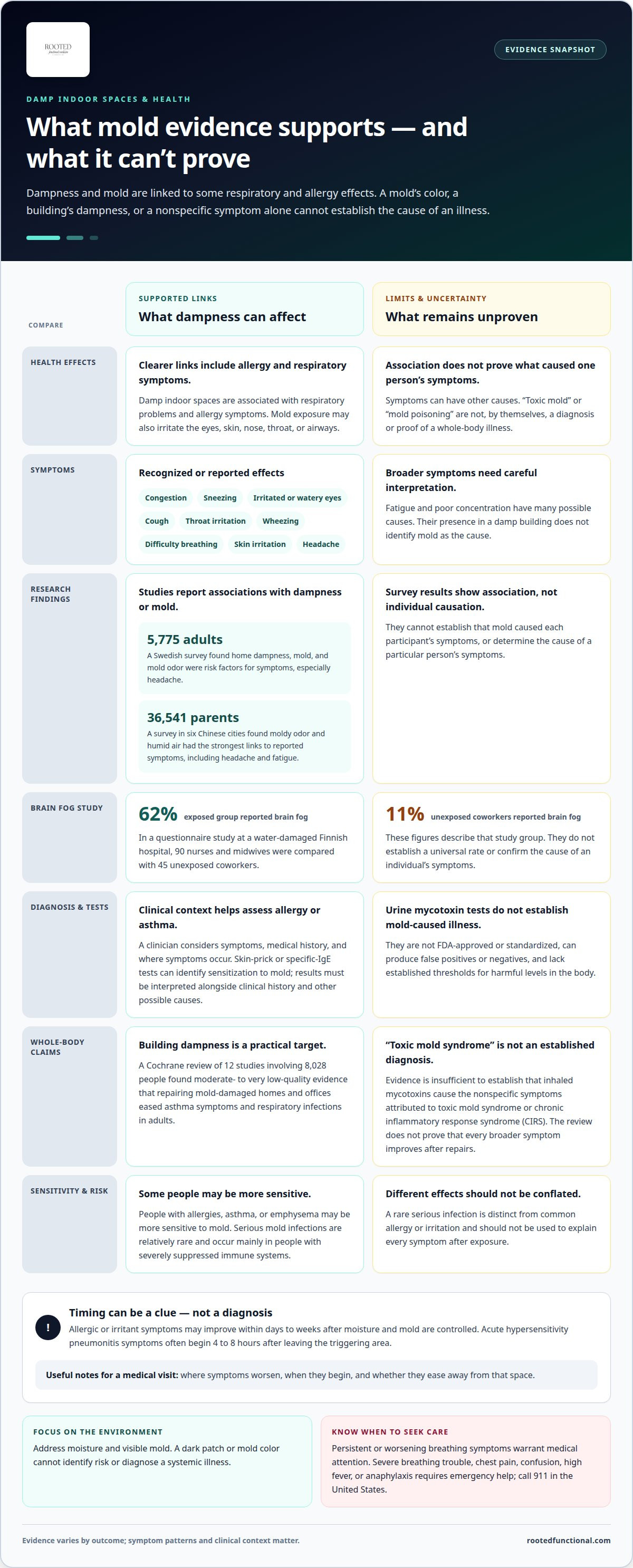
Evidence supports a connection between damp indoor spaces and some health effects, especially respiratory problems and allergy symptoms. It does not establish every symptom linked online to “toxic mold” as a mold-caused illness. A survey of 5,775 Swedish adults found home dampness, mold, and mold odor were risk factors for symptoms, especially headache. A separate survey of 36,541 parents in six Chinese cities found moldy odor and humid air had the strongest links to reported symptoms, including headache and fatigue. These findings show associations, not proof that mold caused each person’s symptoms.
That distinction matters when fatigue, poor concentration, or headaches persist. Such symptoms can have many causes, and living or working in a damp building alone cannot identify which one applies. In a questionnaire study at a water-damaged Finnish hospital, 90 nurses and midwives were compared with 45 unexposed coworkers. Brain fog was reported by 62% of the exposed group and 11% of coworkers. The result describes that study group; it cannot establish a universal rate or confirm the cause of an individual’s fatigue.
There is no clear scientific evidence supporting a diagnosis called toxic mold syndrome. Evidence is also insufficient to establish that inhaled mycotoxins cause the nonspecific symptoms attributed to toxic mold syndrome or chronic inflammatory response syndrome, often shortened to CIRS. In the 1990s, concerns linked Stachybotrys chartarum with infant pulmonary hemorrhage. Later reports found no clear link. A mold’s presence or color cannot, by itself, diagnose a systemic illness.
Some tests can create confusion rather than clarity. Urine mycotoxin tests are not FDA-approved or standardized, can produce false positives or negatives, and lack established thresholds for harmful levels in the body. A positive result therefore does not establish that mold caused fatigue, pain, or another nonspecific symptom. Medical history, symptom patterns, and other plausible causes matter when evaluating illness.
Risk varies by person and condition. People with allergies, asthma, or emphysema may be more sensitive to mold. Serious mold infections are relatively rare and occur mainly in people with severely suppressed immune systems. This differs from common allergy or irritation, and infection should not be used to explain every symptom after exposure.
Environmental repair has more direct evidence for respiratory outcomes. A Cochrane review of 12 studies involving 8,028 people found moderate- to very low-quality evidence that repairing mold-damaged homes and offices eased asthma symptoms and respiratory infections in adults. It supports addressing building dampness, but doesn’t prove that every broader symptom improves. If fatigue or another persistent problem remains unexplained, a Root Cause Consultation can help examine possible contributing factors without assuming mold is the sole cause.
Self-care and indoor air quality
Moisture control is the starting point for preventing indoor mold. Find the source, such as a leaking pipe, damp basement, or condensation around a window, and correct it. Dry wet materials promptly, because mold can return if moisture remains. Removing visible growth without fixing the water source leaves conditions for regrowth.
Keep indoor humidity within a range that discourages mold growth. Environmental health guidelines recommend keeping home humidity between 30% and 50% to help prevent black mold growth. A hygrometer can help you notice persistently damp air. Relative humidity above 60% can be a clue to possible mold contamination, while indoor humidity higher than 50% can encourage growth. A dehumidifier can help in rooms that smell musty or feel damp.
Everyday ventilation helps limit moisture buildup. Run bathroom ventilation during a shower or bath and immediately afterward to help damp air escape. If a bathroom lacks effective ventilation, open a window when conditions allow. Avoid carpeting bathrooms and basements, where damp flooring can be harder to dry. In kitchens, ventilate while cooking and wipe up standing water around sinks.
Promptly removing existing growth helps reduce potential health risks, regardless of mold type. Small affected areas may be cleaned with detergent and water, then dried thoroughly. Where eliminating moisture is impractical, a diluted bleach mixture of one cup of bleach in five gallons of water is one option. Ensure adequate fresh air while using bleach or another cleaner to limit eye, nose, and throat irritation. Do not leave damp surfaces to dry slowly.
Filtration can complement, but not replace, moisture repair. A HEPA filter can trap mold spores from outdoor air before they circulate inside. Replace HVAC filters as directed for the system, and use MERV 11-13 filters only when compatible. A filter won’t fix a leak or remove mold already growing on a wet surface, so pair filtration with repairs and drying.
Some projects need professional handling. According to the New York State Department of Health, a licensed contractor should handle a mold problem larger than 10 square feet. Don’t disturb extensive growth while deciding how to address it. For smaller cleanup, keep the affected area contained where practical, avoid spreading damp debris through the home, and dry cleaned surfaces fully. If growth returns, look again for hidden moisture behind walls, under sinks, or around windows.
These prevention and control steps improve indoor conditions, but they do not diagnose disease or replace care for persistent symptoms. Track whether symptoms change after a room is dried or repaired. This practical record can help you relate environmental changes to how you feel, without treating mold presence alone as proof of illness.
Potential symptoms attributed to mold toxicity
Some symptom lists go well beyond common allergy and breathing complaints. People sometimes attribute fatigue, trouble concentrating, dizziness, tingling, numbness, or a metallic taste to “mold toxicity.” These experiences can be distressing, but a symptom alone does not identify its cause. For example, tingling cannot establish that mold spores entered the body or caused a toxic disease.
A clinic study of 17 patients described metallic taste, numbness, tingling, and vertigo as routine complaints. That finding records symptoms in a small group; it doesn’t show that mold caused them or that they’re typical of mold exposure. A person with vertigo after entering a musty room may notice a pattern, but that timing alone cannot prove the room caused the symptom.
It helps to distinguish common respiratory and allergy effects from broad, nonspecific complaints. Sneezing, nasal congestion, irritated eyes, coughing, or wheezing can fit an allergic or irritant response. Fatigue, headache, or brain fog have many possible causes. The same symptom may occur alongside a mold allergy, asthma, infection, medication effect, or another health condition.
Use a simple observation process rather than applying a label. Record the symptom, the room or building, when it begins, and whether it changes after you leave. For example, note whether sneezing occurs only in a damp bedroom or also outdoors. Bring this timeline to a clinic appointment. It provides practical context without treating a pattern as proof.
Claims of whole-body toxicity often combine symptoms that do not form one specific pattern. A sound approach to evaluating these claims separates observable exposure from assumed cause. Visible mold, a musty smell, or a home test result cannot by itself explain memory problems, numbness, or ongoing fatigue. Urine mycotoxin tests also lack standardized thresholds for harmful levels in the body.
Be cautious about treatment plans that promise to eliminate a broad range of symptoms with detox products, strict diets, or prolonged antimicrobial treatment. These approaches do not establish a diagnosis. Treatment should match an identified condition, such as allergy or asthma, while environmental control addresses dampness and mold. Do not stop prescribed care or begin an intensive regimen based only on an online symptom checklist.
For immediate practical assessment, focus on the environment and the symptom pattern together. Note visible growth, damp materials, and whether ventilation changes the room’s musty conditions. Then seek medical evaluation for persistent, worsening, or disruptive symptoms. Severe breathing trouble, chest pain, confusion, high fever, or anaphylaxis calls for emergency help in the United States: call 911.
What symptoms can indoor mold exposure cause, and which are evidence-based?
The clearest evidence connects indoor mold with allergic and respiratory effects. Common examples include nasal or sinus congestion, sneezing, irritated eyes, coughing, throat irritation, wheezing, and difficulty breathing. Skin irritation and headaches are also reported. These symptoms may follow exposure, but do not identify mold as the cause on their own. A clinician considers the symptom pattern, health history, and other possible explanations.
Allergy symptoms can vary with the person and the mold involved. More than 150 allergenic molds may cause symptoms in people with mold allergies, but allergy to one type doesn’t mean allergy to another. For example, someone may react around one damp room yet tolerate a different environment. Skin-prick or specific-IgE tests can help identify sensitization; results need interpretation alongside clinical history.
Asthma symptoms deserve particular attention. Damp indoor spaces have a well-established relationship with detrimental health effects, although the mechanisms remain uncertain or controversial. In practice, someone with asthma may notice more wheezing or coughing in a damp building. This pattern can support an investigation of the environment, but does not prove mold caused asthma or explain every flare.
Symptoms such as fatigue, brain fog, dizziness, or persistent headaches are less specific. They can occur for many reasons, so their presence alone does not establish a mold-related illness. Record where symptoms occur, what they feel like, and whether they change away from that setting. For instance, note whether eye irritation occurs in one musty room or across different places. Understanding mold toxicity symptoms and treatment starts by distinguishing symptoms with recognized links to exposure from broader claims that need careful evaluation.
Medical evaluation can help distinguish a possible mold allergy from asthma, infection, or another condition. A clinician may compare symptom timing and exposure history with examination findings. If allergy is suspected, testing can show sensitization, but it cannot prove that a particular building caused symptoms. Mold sampling cannot diagnose illness either. A diagnosis should rest on health findings, not a dark patch or a single test result. Questions about mold toxicity symptoms and treatment are best approached by assessing health concerns and environmental clues separately.
Persistent stuffy nose, sneezing, watery eyes, shortness of breath, or wheezing warrants professional attention, especially if symptoms worsen in a particular building or disrupt daily life. Breathing trouble, chest pain, confusion, high fever, or anaphylaxis calls for emergency help; call 911 in the United States. If ongoing symptoms leave you unsure about possible causes, book a Root Cause Consultation to discuss your health concerns.
Rooted Functional Medicine
Rooted Functional Medicine offers a Root Cause Consultation for people seeking a broader review of persistent health concerns. If symptoms continue after indoor moisture is addressed, a consultation can help explore possible contributing factors rather than assuming mold explains everything. Care is personalized, lab-based, and integrative, guided by a person’s health history and needs.
Mold exposure concerns can overlap with other conditions, so a careful review of symptoms and context matters. A consultation may be useful when ongoing concerns affect daily life and you want to discuss possible root causes. It does not replace urgent or emergency care for severe symptoms.
For a conversation about your health concerns, contact Rooted Functional Medicine.
Choose a grounded next step for your health
When symptoms persist, it is understandable to want one clear explanation. A careful approach to mold toxicity symptoms and treatment considers both the environment and your overall health, without assuming one accounts for everything. Track what you’re experiencing, make practical indoor changes, and discuss unresolved concerns with a healthcare professional.
Rooted Functional Medicine offers a Root Cause Consultation for people exploring possible contributors to ongoing symptoms. Its Autoimmune Solutions Program and Healing Neuropathy Webinar address other health concerns, not mold exposure itself. The next step depends on your symptoms and the questions you want to explore.
If you’re ready to discuss your health concerns, contact Rooted Functional Medicine. You deserve a careful conversation and a clear path toward understanding what may be affecting your health.
Frequently Asked Questions
What Is Black Mold?
“Black mold” describes a dark appearance, not a specific diagnosis or measure of danger. Mold color alone cannot identify the species or show whether it explains a health problem. For example, a dark spot on a wall needs attention because it may indicate moisture and growth, not because its color proves “toxicity.” Focus on finding and fixing dampness rather than judging risk by appearance alone.
How long does it take to get sick from mold?
There is no single timeline that applies to every reaction. Timing depends on the person, type of response, and exposure pattern. For example, symptoms that start after entering one building and ease elsewhere may be worth documenting, but timing alone cannot confirm the cause. Record when symptoms begin, where you are, and when they change, then share that pattern with a healthcare professional.
Can mold make you tired?
Fatigue has many possible causes, so feeling tired does not establish mold as the source. Damp homes have been associated with reported symptoms, including fatigue, but an association does not prove what caused one person’s symptoms. Note whether tiredness changes across settings, along with sleep, daily activities, and other symptoms. If fatigue persists or affects daily life, discuss it with a healthcare professional rather than relying on a mold test for an explanation; specialized health screening providers like Bewell can also help identify broader metabolic or physiological factors that may be contributing to low energy.
Can you get sick from eating moldy food?
Yes, eating moldy food can make you sick, and food-related illness differs from breathing mold in a building. Do not taste food to decide whether it is safe; discard food that is visibly moldy or has an unusual smell. If someone develops concerning symptoms after eating it, seek medical advice. Severe symptoms, such as trouble breathing or confusion, require emergency attention.
How do I know if I have a mold problem?
Visible growth, a persistent musty odor, water stains, or recurring dampness can point to a moisture problem. Check likely sources, including under-sink plumbing, window edges, and areas near leaks. Mold testing is not generally recommended to decide whether remediation is needed; visual inspection and moisture mapping often provide useful information. Finding and correcting the water source matters more than identifying mold by color.
How do you detox from exposure?
There is no established “detox” protocol for ordinary mold exposure. Cleveland Clinic states that detox is not needed after black mold exposure because scientific proof does not show that mold toxins cause whole-body conditions. Avoid starting binders, restrictive diets, or prolonged antimicrobial treatment solely because of suspected exposure. Address dampness and seek medical evaluation for symptoms that persist or worsen, so care can focus on a supported diagnosis.
How does it spread?
Mold spreads through spores that move through the air and settle on surfaces. Growth can take hold when spores encounter moisture and suitable material, such as a damp wall or wet fabric. A leak can therefore lead to growth beyond the spot where water first appeared. Repairing the moisture source and removing growth helps limit further spread; cleaning without drying the area can leave conditions for regrowth.
Should I have my home inspected?
Consider an inspection when you find recurring dampness, visible growth, water damage, or a musty smell that persists. Mold testing usually isn’t needed to decide whether a moisture problem requires attention; inspecting surfaces and tracing dampness can guide next steps. For a larger affected area, New York State Department of Health guidance says a licensed contractor should handle mold problems larger than 10 square feet. Seek medical care separately for health symptoms.