Insulin Resistance: How Movement and Blood Sugar Fit Together
Insulin resistance can often be improved through regular movement and sustainable changes to daily habits. Learning how to reverse insulin resistance starts with understanding that muscle activity helps the body use glucose, while fasting blood glucose results can signal when further evaluation is needed. According to the Centers for Disease Control and Prevention, a fasting level of 100 to 125 mg/dL is in the prediabetes range, and a level of 126 mg/dL or higher is a criterion for diabetes.
If you’ve been told your blood sugar is concerning, or you feel tired and unsure what your results mean, it’s understandable to want a clear answer. Insulin resistance can develop without obvious symptoms, and it isn’t simply a matter of willpower. Movement may help improve insulin sensitivity, but the right approach also depends on your health, habits, and risk factors.
This article explains what insulin resistance means and how aerobic activity, strength training, and walking can support blood sugar control. It also covers how symptoms and risk factors fit into the picture, and how fasting glucose levels are interpreted, so you can understand what a result may indicate and what to discuss with a healthcare professional.
Table of Contents
What is insulin resistance?
Insulin is a hormone that helps glucose move from the blood into cells for energy. With insulin resistance, cells respond less effectively to insulin, making it harder for glucose to enter them. The pancreas may compensate by releasing more insulin. Over time, this extra demand can make blood sugar harder to regulate. The issue is not simply that someone has eaten sugar; it involves how the body’s cells respond to insulin.
Insulin resistance can exist before blood glucose reaches the range used to identify diabetes. It matters because unmanaged insulin resistance can progress to Type 2 diabetes and is also linked with metabolic syndrome and heart disease. Type 1 diabetes has a different cause: it is thought to involve an autoimmune reaction, rather than cells responding poorly to insulin. These conditions may affect blood sugar, but they are not interchangeable.
Weight loss can improve insulin sensitivity for people with overweight or obesity. Losing 5-7% of body weight can substantially lower diabetes risk, while a 10% reduction can make a big difference in reducing insulin resistance. There is no single timeline for improvement. It develops alongside sustained changes in weight, activity, and nutrition, rather than according to a fixed calendar date.
The National Institutes of Health Diabetes Prevention Program lifestyle arm targeted a loss of 7 percent of body weight for participants with prediabetes. That target offers a concrete example of a structured lifestyle goal, not a requirement for every person. A smaller, steady reduction may still support insulin sensitivity. The amount to aim for depends on starting weight, health needs, and what changes can be maintained.
Weight loss can affect more than the number on a scale. For someone with obesity, reducing excess body weight may help cells respond better to insulin and make blood glucose easier to regulate, especially alongside regular activity and nutritious food choices. These connected habits help explain why a single food or workout rarely tells the whole story.
Caloric restriction has also been studied in relation to insulin resistance. Research described by Yale endocrinologist Gerald I. Shulman found that restricting intake to about 1,200 calories a day reduced liver fat and reversed liver insulin resistance and Type 2 diabetes. That research describes a specific study approach, not a universal calorie prescription. Individual energy needs vary, and overly restrictive eating can be difficult to sustain.
For a practical weight-loss target, think in percentages of starting weight rather than a one-size-fits-all number of pounds. A 5-7% reduction corresponds to different amounts for people with different starting weights. For example, the same percentage means a smaller scale change for someone weighing less. This framing keeps the goal tied to the person, while leaving room to adjust nutrition and activity as routines evolve.
Insulin resistance is influenced by weight, muscle activity, and nutrition. A sustainable lifestyle plan can bring these factors together: choose regular movement, build meals around nutritious foods, and pursue gradual weight reduction when appropriate. These changes support the body’s use of glucose and response to insulin, and offer a practical way to improve insulin resistance over time.
Aerobic exercise, strength training, and walking
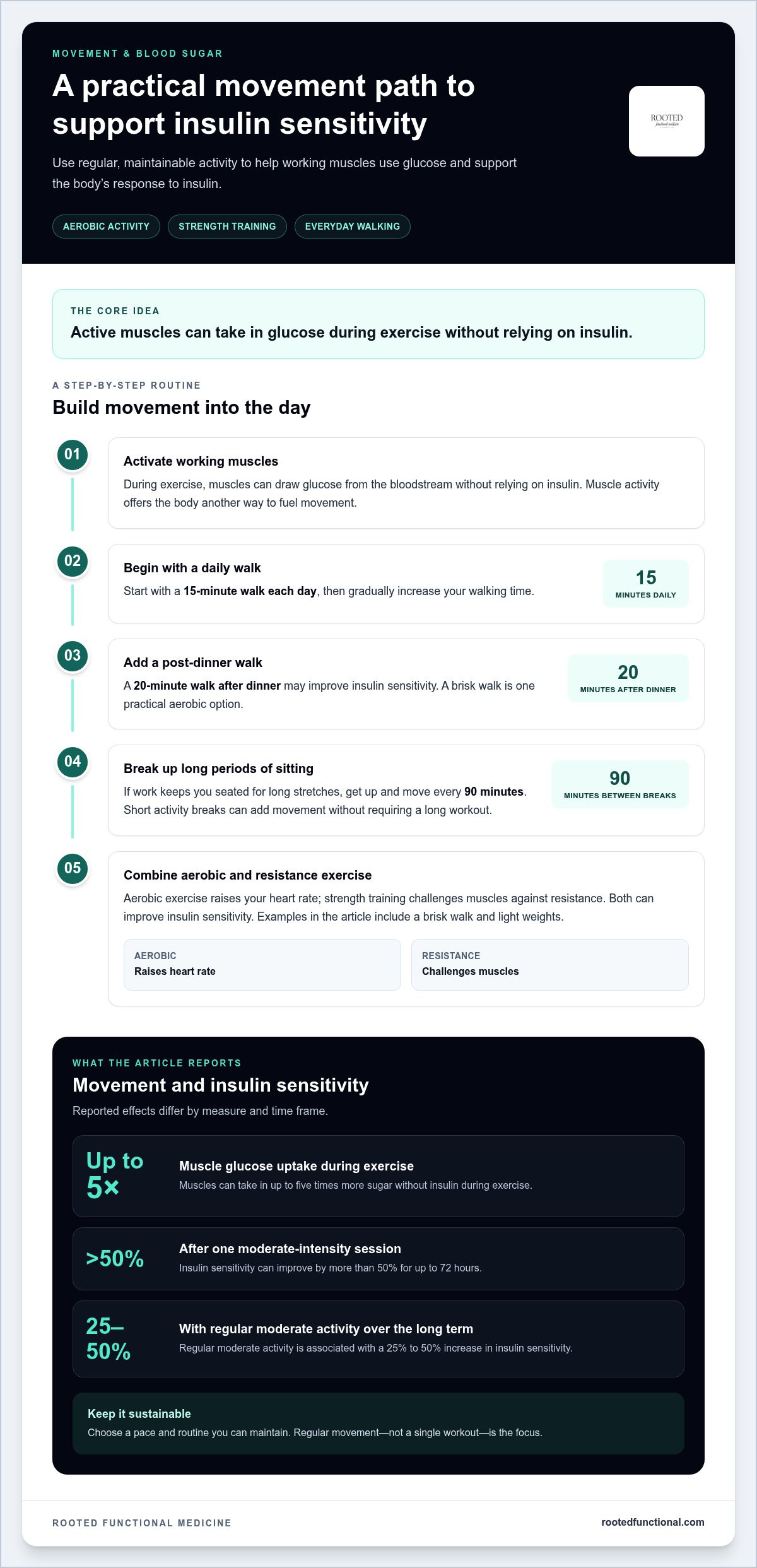
Movement helps working muscles use glucose and supports insulin sensitivity. Combining aerobic activity with resistance exercise can make this support part of a routine you can maintain.
Muscle Glucose Transport During Exercise
Muscle glucose transport is the movement of glucose from the bloodstream into active muscle cells. During exercise, muscles can take in glucose without relying on insulin, giving the body another way to fuel movement. This matters when cells respond less effectively to insulin. A brisk walk, for example, activates muscles and supports glucose use through everyday movement.
Exercise and Muscle Glucose Uptake
Muscle glucose uptake describes how muscles draw sugar from the blood for fuel. During exercise, muscles can take in up to five times more sugar without insulin. That helps explain why walking after eating can be useful: a 20-minute walk after dinner may improve insulin sensitivity. It’s a practical way to connect routine activity with how the body handles glucose.
Exercise and Insulin Sensitivity
Exercise can help the body respond more effectively to insulin. One moderate-intensity session can improve insulin sensitivity by more than 50% for up to 72 hours. Regular moderate activity is associated with a 25% to 50% increase in insulin sensitivity over the long term. If you’re exploring how to reverse insulin resistance, these findings show why consistent movement matters, even when sessions are manageable.
Start with a 15-minute walk each day, then gradually increase your walking time. If work keeps you seated for long stretches, get up and move every 90 minutes. These short activity breaks can add movement to the day without requiring a long workout. Choose a pace and routine you can maintain.
Aerobic and Strength Training
Aerobic exercise raises your heart rate, while strength training challenges muscles against resistance. Both can improve insulin sensitivity. Muscle is a major site of glucose uptake, so using and building muscle supports glucose control. A brisk walk is one aerobic option, while light weights can provide resistance exercise. The NIH Diabetes Prevention Program lifestyle arm targeted at least 150 minutes of moderate activity per week.
One example combines five 30-minute brisk walks with two full-body resistance sessions. A 30-minute walk can also be split into two 15-minute walks or three 10-minute walks. The best starting routine is one you can repeat and adapt. Understanding how to reverse insulin resistance includes seeing activity as a regular part of daily life, not a single intense workout.
Eating balanced meals with vegetables can complement movement, while exercise supports glucose use through muscle activity. If a health condition affects your plans, discuss suitable activity with your doctor. A conversation can help connect your movement goals with your broader health needs; book a Root Cause Consultation to explore that support.
Fasting blood glucose thresholds for prediabetes and diabetes
Fasting blood glucose measures sugar in your blood after fasting, while insulin resistance describes how cells respond to insulin. Insulin helps glucose enter cells for energy. When cells respond poorly, glucose may remain in the bloodstream and the pancreas may release more insulin. A fasting result can screen for prediabetes or diabetes, but it does not explain every factor affecting blood sugar.
According to the Centers for Disease Control and Prevention, fasting blood glucose between 100 to 125 mg/dL is a criterion for prediabetes. A level below 100 mg/dL is below that prediabetes threshold; it does not, by itself, explain insulin sensitivity or other health risks. According to the Centers for Disease Control and Prevention, a fasting blood glucose level of 126 mg/dL or higher is a criterion for diabetes. A healthcare professional interprets a result in context rather than treating one number as the whole picture.
Other information can help assess the pattern. An A1c test reveals average blood glucose over the past three months, while medical and family history, a physical exam, and signs or symptoms may also inform an assessment of insulin resistance. Fasting glucose and A1c provide different views of blood sugar. The specific tests used depend on what needs to be evaluated, including whether the concern is prediabetes, diabetes, or the body’s response to insulin.
There is no single “normal range” here that answers every question. The established fasting glucose criteria identify prediabetes and diabetes; results below the prediabetes threshold don’t independently rule out insulin resistance. For example, a clinician may consider a fasting result alongside A1c, family history, and physical findings. That broader clinical view helps distinguish a blood sugar threshold from an assessment of underlying risk.
Food choices and physical activity can influence blood sugar control. A balanced eating pattern with non-starchy vegetables, fruits, whole grains, and lean proteins supports glucose management. Choosing whole foods more often and limiting processed foods can make it easier to build nourishing meals. Regular movement also helps the body use glucose. These habits support daily blood sugar management, but they don’t replace proper interpretation of test results.
Sleep matters, too. Losing sleep for a single night can increase insulin resistance and blood sugar levels. Adults should aim for seven to nine hours of high-quality sleep each night. Because sleep and stress can affect how manageable health routines feel, consider them alongside eating and physical activity for a fuller picture of daily habits.
If a fasting result falls within either threshold, bring the number and any relevant A1c result to a clinical discussion. Ask how the readings relate to your personal history and symptoms, and what follow-up makes sense. If you’re working on Type 2 diabetes risk, the Type 2 Diabetes Reversal Program may be a relevant next step for exploring personalized, lab-based support.
Risk factors for insulin resistance
Insulin resistance can affect people across different ages and body sizes. Being age 45 or older is one risk factor, but younger adults can also be affected. Nearly 40% of Americans ages 18 to 44 are affected by insulin resistance. A person’s risk reflects a mix of family history, health markers, activity, sleep, and body-fat distribution.
Overweight and obesity, especially excess abdominal fat, are associated with higher risk. Still, body weight alone doesn’t determine insulin sensitivity. People can have insulin resistance without overweight or obesity, and up to 50% of people with insulin resistance were not overweight in a study cited in the research. A waist measurement can add context: more than 35 inches for women or more than 40 inches for men is linked to insulin resistance, even with a moderate BMI.
Family and pregnancy history also matter. A first-degree relative with diabetes, a history of gestational diabetes, or giving birth to a baby weighing more than 9 pounds are risk factors. Heart disease or stroke, sleep apnea, smoking, and sedentary behavior are also associated with insulin resistance. These factors don’t mean a person will develop the condition, but they can help identify who may benefit from closer attention to blood glucose and related health markers.
Blood tests may reveal a risk pattern before symptoms appear. High blood sugar, high triglycerides, and high LDL cholesterol are associated with insulin resistance; low HDL cholesterol is another marker. Physical inactivity can add to these concerns, since regular muscle activity supports the body’s use of glucose. Looking at several findings together provides more context than focusing on one cholesterol result or blood glucose reading alone.
Sleep is another part of the picture. Even losing sleep for a single night can increase insulin resistance and blood sugar levels. A short night may also make it harder to maintain physical activity and supportive eating habits the next day. One poor night doesn’t establish a diagnosis, but repeated sleep patterns can matter alongside other risk factors.
Risk factors can overlap. For example, someone with a family history of Type 2 diabetes, high blood pressure, and a sedentary routine has several reasons to discuss metabolic health. Another person may have a larger waist measurement but no noticeable symptoms. Risk factors guide attention; they don’t establish insulin resistance on their own. Medical and family history, physical findings, and blood tests help build a fuller assessment.
Use these factors as a practical prompt: note family history, past gestational diabetes, sleep apnea, smoking, activity, waist measurement, and cholesterol results. Sharing this information during a health visit can help clarify which findings deserve follow-up. Insulin resistance isn’t limited to people with obesity, and having no symptoms doesn’t make a risk factor irrelevant.
Signs and symptoms of insulin resistance
Insulin resistance can be present for years without noticeable symptoms. Prediabetes may go unnoticed until blood sugar levels rise enough to develop into Type 2 diabetes. That makes physical signs only part of the picture. For example, a person may feel well while risk factors or blood test results point to a need for closer evaluation.
When blood sugar stays high, symptoms can include fatigue, increased thirst, frequent urination, increased hunger, blurred vision, yeast infections, or unexplained weight loss. These signs can have different causes, so they don’t identify insulin resistance on their own. Acanthosis nigricans, a darkened skin area, and skin tags are also associated with prediabetes for some people. Notice patterns and discuss them during a health visit.
Body measurements and blood fats can add clues. A waist circumference of 35 inches or more for women and 40 inches or more for men is associated with insulin resistance. Fasting triglycerides above 150 mg/dL and HDL cholesterol below 50 mg/dL for women or below 40 mg/dL for men are also associated signs. These measurements are pieces of a broader clinical assessment, not a diagnosis by themselves.
Insulin resistance is associated with obesity, cardiovascular disease, metabolic syndrome, and metabolic dysfunction-associated steatotic liver disease. It is also associated with polyendocrine metabolic ovarian syndrome, or PMOS. These conditions may overlap with symptoms such as fatigue or weight changes, but a symptom alone cannot identify the condition involved. Family history and other health information help put those signs in context.
The risks of untreated insulin resistance include progression to Type 2 diabetes, metabolic syndrome, or heart disease. See a doctor if you notice symptoms such as frequent urination, unusual thirst, or blurred vision, or if you have risk factors and want them assessed. A healthcare provider may consider medical and family history, a physical exam, and signs and symptoms when evaluating possible insulin resistance.
Some clues are visible, while others emerge from a blood test or personal history. A clinician may look at waist measurement, skin changes, glucose, triglycerides, and HDL together. For example, skin tags alone don’t establish insulin resistance, but they may be worth mentioning alongside a family history of Type 2 diabetes or a concerning glucose result. Sharing several observations is more useful than focusing on one sign.
Overweight and obesity increase risk, but a person doesn’t need to be overweight to have insulin resistance. Risk can also reflect family history, activity, sleep, and other health factors. If concerns about body weight or related symptoms are affecting your health, a Root Cause Consultation can help explore appropriate next steps and whether the Functional Weight Loss Program fits your goals.
Rooted Functional Medicine: Healing Neuropathy Webinar
Our Healing Neuropathy Webinar offers educational support for people exploring neuropathy and its possible root causes. If insulin resistance or Type 2 diabetes is part of your health picture, the Type 2 Diabetes Reversal Program provides personalized, lab-based, integrative support focused on underlying factors. A Root Cause Consultation can help connect your concerns, health history, and next steps. These options may be relevant when blood sugar concerns persist or you want a more connected view of your health. Contact us to discuss which next step fits your needs.
Choose a next step that fits your health
Understanding how to reverse insulin resistance is a starting point, not a demand to change everything at once. First, identify the health questions you want answered, then seek support that addresses those concerns. A focused conversation can help turn uncertainty into a clearer direction.
Rooted Functional Medicine offers a Root Cause Consultation for people looking to explore underlying health factors, along with the Autoimmune Solutions Program and Healing Neuropathy Webinar for related concerns. The right focus depends on what you’re experiencing and what you want to understand next. You deserve to have your questions taken seriously and your health considered as a whole.
Contact Rooted Functional Medicine to take the next step. Progress can begin with one clear question and a plan shaped around your needs.
Frequently Asked Questions
What causes it?
Insulin resistance develops when the body’s cells respond less effectively to insulin, making glucose regulation harder. It usually reflects several influences rather than one isolated cause. Inherited susceptibility, for example, can combine with long periods of inactivity, disrupted sleep, or changes in body-fat distribution. One meal or symptom cannot explain the whole condition. Health history and patterns over time offer more useful context.
What is insulin sensitivity?
Insulin sensitivity describes how readily the body’s cells respond to insulin. Higher sensitivity means insulin can do its job effectively, helping glucose move from the blood into cells. Lower sensitivity means the body needs more insulin to produce the same effect. For example, two people can eat similar meals yet process glucose differently because their cells respond differently to insulin.
What causes insulin resistance, and can it be reversed?
Insulin resistance is linked to interacting factors, including genetics, activity, sleep, and metabolic health. Sustainable lifestyle changes can improve insulin sensitivity and help manage blood glucose. “Reversed” doesn’t mean ignoring future health patterns: changes in activity, nutrition, or weight can affect insulin response again. Track progress through appropriate clinical follow-up rather than relying only on how you feel day to day.
What diet helps improve insulin sensitivity, and which foods should you limit?
A whole-food eating pattern can support blood sugar management. Build meals around non-starchy vegetables, fruits, whole grains, and lean protein, and choose less processed food more often. For example, include vegetables and a protein source alongside a whole-grain choice. Limit highly processed foods as part of an overall pattern rather than expecting one ingredient to determine insulin sensitivity. Personal food needs can differ.
How much exercise is recommended to improve insulin resistance?
A useful weekly goal is at least 150 minutes of moderate activity, alongside strength training. Brisk walking is one option; resistance exercise helps work the muscles that use glucose. If you’re starting from little activity, begin with a manageable routine and build gradually. Shorter bouts can fit around work or caregiving. Choose movement you can repeat, and discuss a new plan with your doctor if health concerns affect exercise.
Which medications treat insulin resistance, and when are they prescribed?
Medication choices depend on a person’s blood sugar, blood pressure, cholesterol, and related diagnoses. Treatment may include metformin for diabetes or prediabetes, blood pressure medication, or statins to lower LDL cholesterol. These medicines address specific health needs; they aren’t interchangeable or suitable for everyone. A clinician considers test results, medical history, and treatment goals when deciding whether medication belongs in an individual care plan.
Can supplements such as berberine or magnesium improve insulin resistance, and what are the risks?
Don’t assume berberine or magnesium will improve insulin resistance or suit your needs simply because they’re supplements. Effects and safety depend on the product, dose, health conditions, and medicines you take. Before starting one, share the exact product with a healthcare professional and review possible interactions and side effects. Supplements shouldn’t replace prescribed treatment or blood glucose monitoring. A targeted plan should reflect your health information, not a general online recommendation.