How to Lose Menopause Belly Fat by Understanding What Causes It
Menopause belly fat isn’t simply a sign that you’ve stopped trying. Learning how to lose menopause belly fat starts with understanding why fat may shift toward the abdomen as estrogen levels fall, while age-related muscle loss can also affect how many calories your body burns at rest. Menopause typically occurs between ages 45 and 55, according to the National Institute on Aging.
If your waistline has changed despite familiar routines, that can feel frustrating and confusing. This guide explains when menopause-related weight changes may begin, how estrogen can influence fat distribution, and what habits may support healthier weight management. You’ll also learn what hormone therapy may do, so you can better understand the options and the factors behind that stubborn change around your middle.
Table of Contents
When does menopause weight gain start?
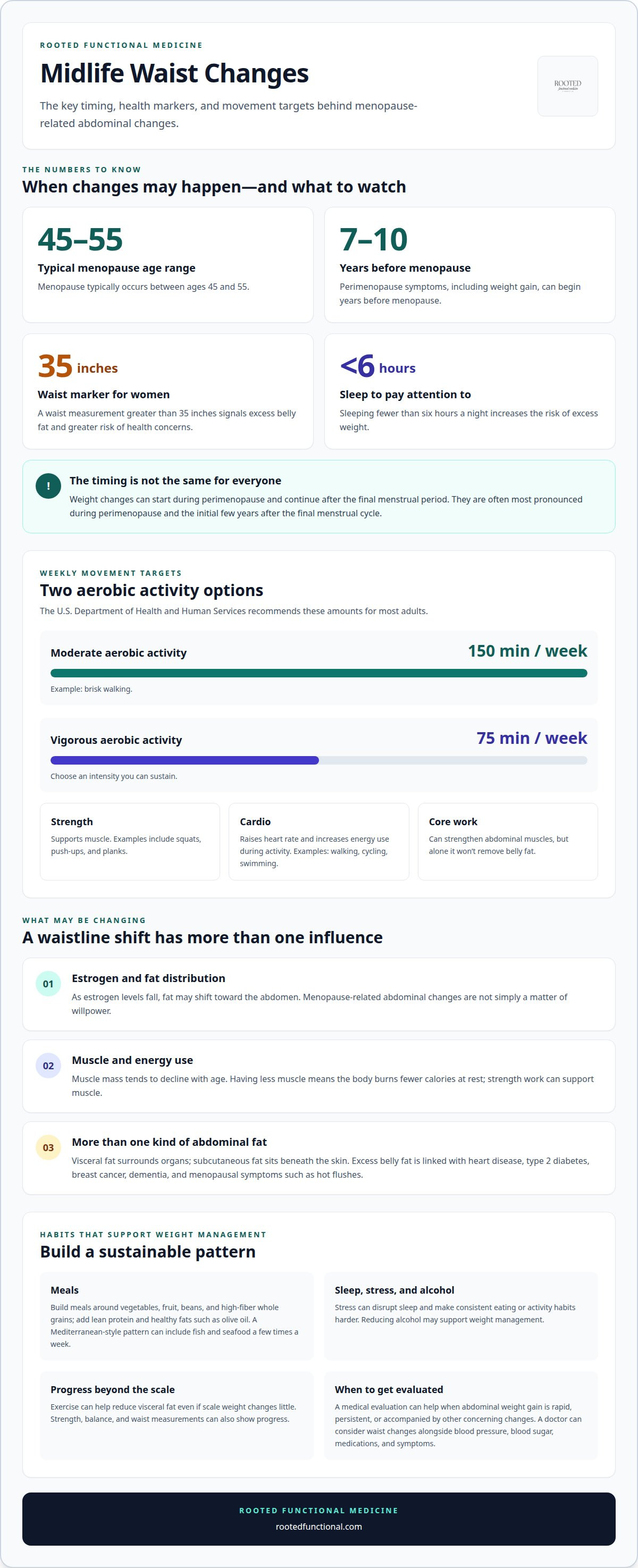
Menopause typically occurs between ages 45 and 55, according to the National Institute on Aging. Weight changes can begin earlier, during perimenopause, and may continue after the final menstrual period. The timing varies, but abdominal changes in midlife are not simply a matter of willpower.
Perimenopause symptoms, including weight gain, can begin seven to 10 years before menopause. Weight gain is often most pronounced during perimenopause and the initial few years after the final menstrual cycle. Aging, changing activity levels, and declining muscle mass can also contribute. These factors may affect how many calories your body uses and where it stores fat.
Measure your waist consistently rather than judging change by clothing alone. For women, a waist measurement greater than 35 inches signals excess belly fat and a greater risk of health concerns, according to the National Heart, Lung, and Blood Institute. Abdominal fat includes visceral fat, which surrounds organs, as well as fat beneath the skin. The location matters because excess belly fat is linked with heart disease, type 2 diabetes, breast cancer, dementia, and menopausal symptoms such as hot flushes.
Eating patterns can support weight management without crash diets. Build meals around vegetables, fruit, beans, and high-fiber whole grains, then add lean protein and healthy fats such as olive oil. A Mediterranean-style pattern can include fish and seafood a few times a week. Refined carbohydrates tend to contain less fiber and digest quickly, which may make overeating easier. Focus on satisfying meals and portions that suit your needs rather than cutting out entire food groups without guidance.
Sleep, stress, and alcohol can affect routines that influence weight. Sleeping fewer than six hours a night increases the risk of excess weight. Stress can disrupt sleep and make consistent eating or activity habits harder to maintain, while reducing alcohol may support weight management. Track sleep, alcohol, and eating patterns alongside waist changes to spot habits that could be affecting your progress.
Movement supports health even when the scale changes slowly. The U.S. Department of Health and Human Services recommends that most adults get at least 150 minutes a week of moderate aerobic activity. It recommends at least 75 minutes a week of vigorous aerobic activity for most adults. Choose an intensity you can sustain, such as brisk walking, and pair cardio with strength work to support muscle.
Arrange a medical evaluation if abdominal weight gain is rapid, persistent, or accompanied by other concerning changes. A doctor can consider waist changes alongside blood pressure, blood sugar, medications, and symptoms. This can help distinguish common midlife shifts from health factors that may need attention.
Why does belly fat increase during menopause?
Menopause can bring changes that make the waistline harder to manage. Muscle mass tends to decline, and having less muscle means the body burns fewer calories at rest. Exercise can help by supporting muscle and reducing visceral fat, even if scale weight changes little. Progress may show up in strength, balance, or waist measurements before pounds change.
Strength training supports muscle. Squats, push-ups, and planks challenge different muscle groups and can help maintain strength and metabolism. Include muscle-strengthening activity regularly, choosing movements you can control. Start with a chair squat or wall push-up, then adjust as your strength improves. Learning how to lose menopause belly fat means focusing on sustainable changes that support muscle, not chasing a quick change on the scale.
Cardio adds a different benefit. Walking, cycling, and swimming raise your heart rate and increase energy use during activity. Choose a manageable intensity and build gradually. For example, walk briskly on a familiar route, then add a hill or a faster stretch when it feels comfortable. Regular aerobic exercise complements strength training rather than replacing it.
Core work and HIIT have specific roles. Planks and controlled crunches can strengthen abdominal muscles, but core exercise alone won’t remove belly fat. High-intensity interval training alternates harder efforts with easier recovery periods. You might alternate a faster walking pace with a relaxed one. Keep harder intervals appropriate to your fitness and use recovery periods to regain control of your breathing.
Weight loss involves combining regular physical activity with reduced calorie intake. That doesn’t mean severe restriction. Pair movement with meals built around vegetables, beans, whole grains, and protein, then notice which habits are easiest to maintain. A food and activity log can reveal patterns, such as long inactive stretches or meals that leave you hungry soon afterward. Use those observations to make one realistic adjustment at a time.
Motivation often grows from a plan that fits real life. Schedule a walk after lunch or strength exercises before a regular evening activity. If a workout feels daunting, begin with one familiar movement and repeat it consistently. Exercise supports more than the number on the scale; abdominal fat has also been linked with health risks, including dementia. For a practical plan, consider how to lose menopause belly fat through eating and movement habits that fit your needs. Book a weight-management appointment.
Can Hormone Therapy Help Control Weight Gain?
Hormone therapy may affect abdominal fat, but weight management also involves eating patterns, activity, and health history. Changes to calorie intake and eligibility for medication are separate considerations.
Weight Gain During Perimenopause
Perimenopause is the transition before menopause, when symptoms can begin as hormones shift. Symptoms, including weight gain, may start seven to 10 years before menopause. Weight gain is often most pronounced during perimenopause and the initial few years after the final menstrual cycle. Recognizing this timing can help you connect changes with the transition, rather than assuming they began only after periods stopped.
Hormone Therapy and Weight Changes
Menopausal hormone therapy is treatment that uses hormones to address menopause-related changes. It may help reduce belly fat after menopause, but that doesn’t mean it guarantees weight loss or replaces nutrition and movement habits. Hormone therapy also carries a small but increased risk of breast cancer, heart attack, and stroke. These potential effects matter when weighing treatment goals, including abdominal fat and other symptoms.
For weight loss, a calorie reduction of 500 to 750 calories a day is associated with long-term success. A gradual pace matters: this approach is associated with an average loss of around 1 to 1.5 pounds a week. The goal is steady progress, not a rapid drop that’s difficult to maintain. Pair a moderate reduction in calories with regular activity and meals that include filling, nutrient-dense foods.
Track what changes in practice. Note meals, activity, and waist measurements, then look for patterns you can adjust. Replacing a frequent sugary drink with water or adding vegetables to lunch can reduce calorie intake without eliminating an entire food group. Gradual, consistent changes are easier to sustain, while extreme restriction can make eating and weight management harder.
Weight-loss drugs may be appropriate for people with a BMI greater than 30 kg/m2, or greater than 27 kg/m2 with certain medical comorbidities, according to the National Institute of Diabetes and Digestive and Kidney Diseases. BMI is one eligibility factor, while related conditions also matter. Medication is not a substitute for a broader plan addressing eating, activity, and health concerns such as excess fat around organs.
Hormone therapy and weight-loss medication address different considerations. Hormone therapy may help with postmenopausal belly fat, while eligibility for medication depends partly on BMI and related health conditions. Discussing these factors together can clarify which goals matter most, including weight change, menopause symptoms, and risks such as heart attack or stroke.
How estrogen changes affect abdominal fat distribution
As estrogen levels drop during menopause, fat storage tends to shift toward the abdomen rather than the hips and thighs. This is a change in fat distribution, not simply an increase in the amount of fat. Familiar clothes may fit differently as your waist changes, even when the scale doesn’t tell the whole story. That distinction helps explain why midlife body changes can feel sudden or unfamiliar.
Abdominal fat includes two different types. Subcutaneous fat sits beneath the skin and may be easier to pinch. Visceral fat lies deeper, around internal organs. About 90% of body fat in most people is subcutaneous fat, while about 10% is visceral fat. These proportions describe body fat generally, not an individual woman’s exact composition. A waist measurement alone can’t show how much fat is visceral.
The location matters because excess belly fat is linked to health concerns, including type 2 diabetes and heart disease. Visceral fat surrounds organs, so abdominal fat isn’t only a cosmetic change. Use waist measurements as one marker to discuss alongside health factors such as blood sugar and blood pressure. That broader view can make the change easier to understand than relying only on weight or clothing fit.
Estrogen is one influence on a changing middle, but not the only one. Muscle mass tends to decline during menopause, which can lower the calories the body burns at rest. Aging and lifestyle changes can also contribute to midlife weight gain. Together, these factors may affect both total body fat and where it is stored. That’s why two people at the same stage of menopause may notice different changes.
Daily habits can support overall weight management, though no single food can direct fat loss from one area. Choose meals with vegetables, beans, fruit, and whole grains, then include protein and healthy fats. A Mediterranean-style eating pattern may feature olive oil and fish or seafood a few times a week. Reducing alcohol may also help, particularly when drinks add calories without making you feel full.
Walking is a practical way to build regular activity into your week. Pair it with strength training to support muscle rather than expecting walking alone to change fat distribution. Track waist measurements consistently and note changes in activity and eating. These steps won’t measure visceral fat directly, but they can reveal patterns worth discussing during a health visit.
Think of estrogen-related redistribution as one part of a larger picture: hormones influence fat storage, while muscle, aging, and daily habits also contribute. For example, a growing waist with little change on the scale may reflect a shift in fat distribution, not just total weight. Understanding the difference can help you focus on health markers and sustainable routines rather than blame yourself for a body change you didn’t choose.
Causes and distribution of menopause belly fat
Menopause belly fat rarely has a single cause. Declining muscle mass can slow metabolism, while aging and lifestyle changes may contribute to midlife weight gain. Less movement, disrupted sleep, and changes in eating patterns can affect weight too. Sleeping fewer than six hours a night increases the risk of excess weight. Looking at these factors together helps explain why a familiar routine may produce different results over time.
Fat distribution can also shift across the menopause transition. Fat distribution may shift toward the abdomen during the menopause transition. Fat distribution may change after menopause. These figures describe group patterns, not an individual prediction. A changing waist may reflect both overall weight gain and a shift in where fat is stored, so scale readings alone can miss part of the picture.
Abdominal fat includes subcutaneous fat beneath the skin and visceral fat around internal organs. A waist measurement can help track change, but it cannot reveal the exact amount of visceral fat. Excess belly fat is associated with health risks such as type 2 diabetes, heart disease, high blood pressure, and stroke. It is also linked with breast cancer and dementia. These associations are reasons to consider health, not just appearance.
To identify possible contributors, compare waist changes with everyday routines. Note sleep, movement, meals, and alcohol use, then look for patterns. For example, less walking or more frequent processed meals may coincide with a change in weight. This record can’t diagnose a cause, but it can make a healthcare conversation more specific. Understanding these patterns also gives you a clearer starting point for how to lose menopause belly fat.
Build a weight-management approach around factors you can influence. Meals with vegetables, beans, whole grains, and lean protein can support balanced eating. Regular movement and muscle-strengthening activity address different parts of the picture. Instead of making several drastic changes at once, choose one habit to adjust and observe how it fits your routine. This makes it easier to see which changes are practical and sustainable.
Understanding how to lose menopause belly fat means considering the combination of body composition, habits, and health markers, not blaming yourself for one number. If waist changes occur alongside blood sugar concerns or other health issues, discuss the full pattern with a healthcare professional. A consultation about weight and health concerns can help you explore factors relevant to your individual goals.
Rooted Functional Medicine: Healing Neuropathy Webinar
Rooted Functional Medicine offers a Functional Weight Loss Program for people seeking support with weight changes and the habits that shape them. A Root Cause Consultation can help you explore health concerns alongside eating patterns, activity, and other factors relevant to your goals. If menopause-related changes feel difficult to manage alone, these services offer a way to discuss a personalized approach.
The Healing Neuropathy Webinar addresses neuropathy, while weight-related concerns may be a better fit for a consultation or the Functional Weight Loss Program. You can also explore the Type 2 Diabetes Reversal Program if diabetes is part of your health picture. Contact Rooted Functional Medicine or visit rootedfunctional.com to learn more.
Choose a Next Step That Fits Your Health
Your next step doesn’t need to be a stricter diet or another attempt to force your body back into an earlier shape. Start by asking what support would make healthy habits easier to understand and sustain. A Root Cause Consultation can help you explore your concerns in light of your health history and goals. If you’re ready to discuss how to lose menopause belly fat with a focus beyond the number on the scale, bring your questions and observations to a consultation.
Rooted Functional Medicine also offers the Healing Neuropathy Webinar and Autoimmune Solutions Program. Those options address different health concerns, while a conversation about weight-related goals can focus on the factors most relevant to you. You deserve to have your concerns heard and your next steps grounded in your needs. Book a Root Cause Consultation and take the next step toward a clearer, more personal plan.
Frequently Asked Questions
What causes weight gain in midlife?
Midlife weight gain can reflect aging, changing routines, and shifts in muscle mass, not menopause alone. Start by comparing recent habits with earlier ones: note changes in walking, sleep, meal timing, and strength activity. For example, less movement during the workday may affect energy balance even when meals seem unchanged. A clinician can also review medications and health changes that coincide with weight gain.
Are there any exercises that target belly fat?
No exercise can selectively remove belly fat. Crunches and planks strengthen abdominal muscles, but fat loss involves the body as a whole. A practical routine can combine brisk walking or cycling with strength exercises for major muscle groups. For example, pair a walk with squats and wall push-ups. Track stamina and strength alongside waist changes, since the scale may not capture every improvement.
What are the risks of belly fat?
Excess belly fat is associated with higher risks of heart disease, type 2 diabetes, high blood pressure, and stroke. It is also linked with breast cancer and dementia. These associations do not mean belly fat causes every case of these diseases, but they make abdominal changes worth discussing during routine care. Share waist trends and relevant health history, such as blood pressure or blood sugar concerns, with your clinician.
What if my diet was fine before menopause?
A familiar eating pattern may affect weight differently as activity and muscle change with age. Women in their 50s might need about 200 fewer calories per day than in their 30s and 40s. Rather than overhaul every meal, review portions and routines first. For example, check whether snacks, drinks, or less movement have changed, then make one adjustment that still leaves meals satisfying.
What is the best exercise for menopause?
The best plan is one you can repeat and that includes both aerobic activity and muscle strengthening. Walking, cycling, or swimming can build cardiovascular fitness, while squats, push-ups, and resistance exercises challenge muscles. If joint discomfort makes impact difficult, choose a lower-impact activity and adjust the pace. Increase duration or intensity gradually, and include balance-focused movements such as supported standing exercises.
Why does menopause cause belly fat and changes in body composition?
Falling estrogen levels can shift fat storage toward the abdomen, while declining muscle mass can change body composition. As a result, waist size may change even when total weight changes little. Fat beneath the skin and visceral fat around organs are different, and a mirror can’t distinguish them. Consider waist trends alongside health markers and daily habits rather than treating one scale reading as the whole picture.
What diet helps reduce abdominal fat after menopause?
A Mediterranean-style eating pattern is a practical option: emphasize vegetables, fruit, beans, and whole grains, alongside olive oil and fish or seafood. Limit processed meats and saturated fat, and include lean protein. One plate framework suggests filling two-thirds of the plate with vegetables, fruits, whole grains, or beans and legumes, and keeping animal protein to one-third or less. Adapt meals to your preferences so the pattern remains sustainable.
How much protein and fiber should postmenopausal women eat for weight loss?
For most older adults, a protein range of 1.2 to 2 grams per kilogram of body weight is described as appropriate. Individual needs depend on body size, activity, and health context. Build fiber through foods such as beans, lentils, vegetables, berries, and whole grains; spread them across meals and increase gradually if your current intake is low. A clinician or dietitian can tailor targets to your needs.