How to Improve Mitochondrial Function Through Daily Habits
Mitochondria produce 90% of the energy in the human body, so the habits that support them matter. If you’re wondering how to improve mitochondrial function, start with the foundations: nourishing food, regular movement, restorative sleep, and practical ways to reduce stress and pollutant exposure.
When fatigue or brain fog interferes with daily life, it’s understandable to look for an explanation. Mitochondria are part of the picture, but they don’t explain every symptom, and no single habit addresses every underlying cause. Small, consistent changes can still support the body’s energy systems.
This guide explains how mitochondria relate to physical and mental health, which nutrients support their work, and how sleep, stress, exercise, and environmental exposures can affect them. It also looks at pollutants, an often-overlooked part of the conversation, to help you identify where everyday choices may make a difference.
Table of Contents
How Do Mitochondria Impact Health or Disease?
If you’re wondering how to improve mitochondrial function, start by understanding how these structures support cells. Their role in energy production connects cellular activity with movement, recovery, and everyday tasks.
Mitochondria and Cellular Energy Production
Mitochondria help convert nutrients into usable energy for cellular work. That energy supports muscle contraction, tissue repair, and brain activity. During movement and exercise, muscles can use up to 90% of the body’s overall energy demand. This helps explain why cellular energy matters during activity and recovery, though fatigue alone can’t identify its cause.
Energy production also depends on nutrients available to cells. Magnesium participates in more than 300 biochemical reactions, including energy production. A varied diet with whole grains, leafy plants, fruits, vegetables, and fish supplies nutrients involved in metabolism. CoQ10, omega-3 fatty acids, B vitamins, and L-carnitine are also associated with mitochondrial functions. A useful approach to how to improve mitochondrial function starts with overall dietary patterns, not one nutrient alone.
Measuring Mitochondrial Function
Mitochondrial function describes how effectively mitochondria help produce usable cellular energy. Symptoms and selected tests can offer clues, but no single measure captures every aspect. Energy, exercise tolerance, and recovery are useful observations; laboratory tests may examine specific aspects of metabolism or cellular respiration. Consider how to improve mitochondrial function in the context of your symptoms and health history.
Mitochondrial dysfunction has been identified as a potential contributor to fatigue, chronic pain conditions such as migraine and fibromyalgia, and inflammatory disorders such as inflammatory bowel disease. These associations don’t mean mitochondrial changes are the sole cause. Persistent symptoms call for a broader view that considers pain, inflammation, sleep, nutrition, and activity patterns.
Long COVID is defined as symptoms lasting at least 3 months after an initial SARS-CoV-2 infection, according to the Centers for Disease Control and Prevention. Ongoing fatigue or reduced exercise tolerance can affect daily routines after infection. Recording when symptoms began, what worsens them, and how recovery changes can help clarify the pattern for a clinical discussion.
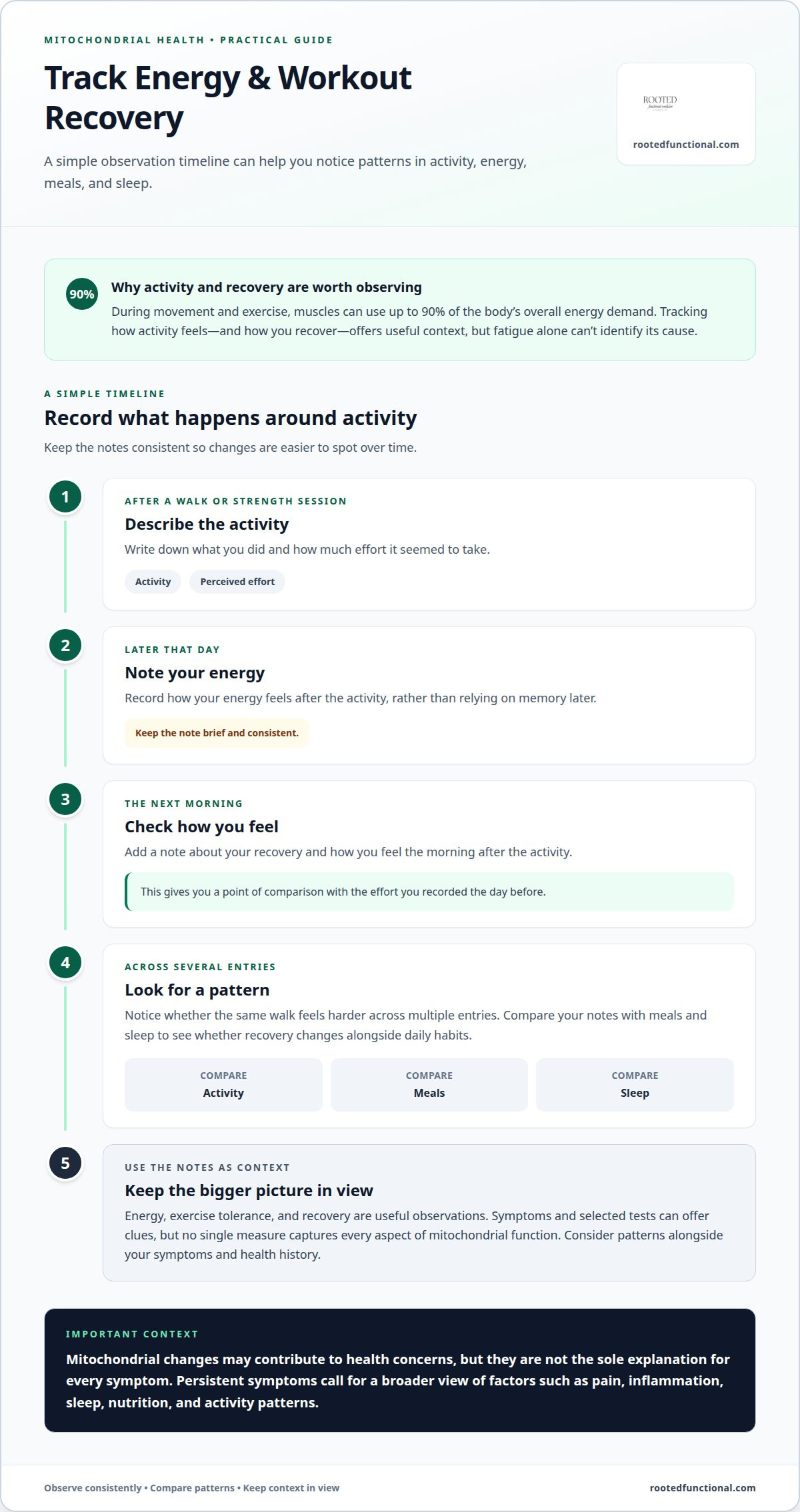
Track your energy and workout recovery consistently rather than relying on memory. After a walk or strength session, note the activity, perceived effort, your energy later that day, and how you feel the next morning. If the same walk feels harder across several entries, that pattern offers useful context. Compare your notes with meals and sleep to see whether recovery changes alongside daily habits.
How Does Mitochondrial Dysfunction Affect Mental Health?
Mitochondria support brain cells as they use energy for communication and everyday activity. Their function is one part of a broader picture that includes sleep, nutrition, movement, and metabolic health.
Ageing and Cognitive Decline
Ageing and cognitive decline involve changes in brain function that can affect memory, attention, or thinking. Mitochondrial dysfunction has been identified as a potential contributor to brain and cognitive-related disorders. This connection matters, but mitochondrial changes aren’t the only possible explanation for symptoms. A clinician considers the pattern alongside your health history and daily function.
For example, persistent difficulty concentrating may occur alongside fatigue, disrupted sleep, or mood changes. These experiences deserve attention, not dismissal, but they don’t prove that mitochondria are the cause. A clinician can investigate possible contributors while lifestyle habits support overall health. Exercise, regular meals, and restorative sleep give the body consistent foundations for cellular activity.
Metabolic Health and Brain Inflammation
Metabolic health describes how the body manages energy, blood sugar, and related processes. Metabolic inflammation may affect brain health, while mitochondrial dysfunction has been identified as a potential contributor to cognitive-related disorders. Sustainable habits can support this broader picture: regular exercise, nutrient-dense meals, and a healthy weight. These steps support overall metabolic health rather than targeting one organelle alone.
A Mediterranean-style eating pattern offers practical examples: leafy greens, cruciferous vegetables, fish, olives, whole grains, and fermented foods. These minimally processed foods provide nutrients and healthy fats associated with mitochondrial health. Colorful fruits and vegetables also contain antioxidants that help the body manage oxidative stress. A meal of salmon, greens, and whole grains is one simple way to bring these choices together.
Gut health matters because digestion and nutrient absorption affect which nutrients are available to the body. A varied diet that includes fermented foods, such as yogurt or sauerkraut, can support dietary diversity. Ongoing digestive symptoms may also affect eating patterns or the ability to tolerate certain foods. A brief record of meals and symptoms can help reveal patterns to discuss during care.
Brain fog, low mood, and cognitive changes can have many contributors. A useful next step is to note when symptoms occur and how they relate to sleep, meals, and exercise. This gives a clearer starting point for exploring metabolic health and persistent concerns. Discussing metabolic health and ongoing symptoms can help connect those patterns with the broader health picture.
Stress management and restorative sleep
Sleep and stress shape the conditions in which cells manage energy. Mitochondria are organelles involved in energy production, so daily recovery habits matter. Poor sleep can compound fatigue and make chronic health disorders harder to manage. Focus on steady routines, meaningful connection, and sustainable recovery practices. These habits support mitochondrial health, though they don’t explain every change in energy or stress.
A practical sleep target is 7-8 hours each night. Deep sleep is an important part of restorative sleep and may be relevant to mitochondrial health. A consistent bedtime and wake time can make sleep routines easier to maintain. For example, dimming lights and setting aside work before bed create a clear transition into rest. Track bedtime, wake time, and next-day energy to notice patterns rather than judging recovery by one night.
Alcohol can reduce deep-sleep duration and damage mitochondria. If you notice morning fatigue after drinking, record it alongside your bedtime and sleep quality. This can help clarify whether alcohol coincides with poorer rest. Sleep problems and low energy can have multiple causes, so a brief record of sleep, alcohol, and symptoms offers more useful context than memory alone.
Stress management can also mean reducing isolation where possible. Social interaction may reduce stress and support mitochondrial function. A regular phone call, shared meal, or walk with a friend can make connection part of your routine. Pairing social time with gentle movement may make it easier to maintain. Notice whether these interactions coincide with changes in tension, mood, or energy.
Sauna is another form of heat stress discussed in relation to health. The described practice uses 170-190°F (77-88°C) for 20 minutes. Research published in JAMA Internal Medicine found the strongest association with longevity benefits at 4-7 sauna sessions per week. That finding describes an association, not proof that sauna improves mitochondrial function. Sauna isn’t the only route to recovery; sleep and stress habits remain meaningful foundations.
Use a small weekly log to connect these habits with how you feel. Record sleep duration, alcohol use, social contact, sauna sessions, and daytime fatigue. Add a brief note about concentration or workout recovery, such as whether your usual walk felt harder. Look for repeated patterns across entries, not one unusually good or difficult day. This gives you a clearer view of how rest and stress relate to your routine.
Evidence about stress and cellular health can be complex, and one habit rarely explains an entire pattern. Start with a consistent bedtime, protect time for restorative sleep, and make room for connection. If fatigue persists alongside sleep changes or other symptoms, bring your observations into a broader conversation about your health. Mitochondria are part of the body’s response to daily demands, not a stand-alone explanation for every concern.
What Nutrients Support Mitochondrial Function?
Food provides nutrients involved in energy metabolism and mitochondrial activity. Seek medical evaluation for persistent or worsening fatigue, muscle weakness, or other symptoms that disrupt daily life. Symptoms alone can’t identify mitochondrial dysfunction.
Nutrients and Supporting Foods
Nutrients associated with mitochondrial function include polyphenols, CoQ10, omega-3 fatty acids, vitamin C, zinc, B vitamins, magnesium, L-carnitine, and alpha-lipoic acid. They support different metabolic processes, so a varied eating pattern matters more than focusing on one molecule. For example, citrus fruits provide vitamin C, while seeds and legumes offer magnesium and zinc.
Foods can supply a range of nutrients together. Berries and other colorful produce contain polyphenols; fish provides omega-3 fats, while whole grains contribute B vitamins. Spinach, nuts, and beans add variety to meals. These examples can help shape a balanced plate, but they don’t establish that a particular nutrient deficiency or disease is present.
Plant-Based Nutrition and Mitochondrial Biogenesis
Mitochondrial biogenesis is the process of forming new mitochondria. A plant-forward eating pattern can support mitochondrial function and biogenesis, making beans, vegetables, fruits, nuts, and whole grains useful meal foundations. Mediterranean-style eating emphasizes plants, healthy fats, and whole grains, and is associated with reduced mitochondrial damage, improved function, and anti-inflammatory effects.
Build meals around foods you can eat consistently. A bowl of beans, vegetables, whole grains, and olive oil is one example; fruit and nuts can round out another meal. Fish can also fit a plant-forward pattern. These choices provide nutrients through food, without making one ingredient responsible for energy, muscle performance, or metabolic health.
Different tests answer different questions. Nutrient or metabolic testing may help assess specific concerns, while cortisol testing examines hormone levels and stool testing can provide information about digestive health. None is a stand-alone measure of mitochondrial function. A clinician considers symptoms, diet, medical history, and the reason for testing when interpreting results.
Research on specific compounds is still distinct from everyday food guidance. In a randomized study involving 66 people over age 65, urolithin A supplementation was associated with significant reductions in several acylcarnitines and ceramides linked to mitochondrial metabolic disorders in the supplemented group. That finding describes particular molecules and participants. It doesn’t establish a general supplement plan for every person.
Start with your eating patterns, then investigate persistent concerns with appropriate clinical guidance. A record of meals, symptoms, and activity can help frame the discussion. It may clarify whether concerns involve dietary intake, metabolic health, digestion, or another issue, and help keep nutrient support focused rather than relying on unsupported supplement claims.
Pollutant exposure and mitochondrial function
Reducing exposure to pollutants is one lifestyle measure that may affect mitochondrial health. Exposure can come from ordinary settings, not just industrial sites. Consider time near busy roads, smoke indoors, or strong cleaning products. The goal isn’t to control every environmental factor. Instead, notice recurring sources and make manageable changes where they fit your daily life.
Start with a simple exposure record. For several days, note where you spend time, which products you use, and when symptoms such as fatigue occur. For example, record whether cleaning a small room, cooking, or commuting coincides with a change in how you feel. This log can’t diagnose a cause, but it gives a clearer account of routines and possible exposure patterns to discuss with a clinician.
Then choose one practical adjustment. If smoke enters your living space, consider ways to keep indoor areas smoke-free. If a cleaning product has a strong scent, use it only as directed and let fresh air into the room when practical. If traffic is part of your commute, note the route and timing. Small, specific changes are easier to maintain than trying to eliminate every possible source at once.
Indoor air and product use deserve attention because they’re part of everyday exposure. Keep chemicals in their original containers, follow label directions, and avoid mixing cleaning products. When cooking, use available ventilation, such as an exhaust fan. These are practical ways to limit unnecessary contact. They don’t prove that a particular product is affecting your mitochondria or causing an inflammatory condition.
Food and supplements play a different role. A balanced eating pattern can provide nutrients associated with mitochondrial function, but food or supplements don’t remove pollutants from your home or workplace. Avoid taking multiple supplements instead of identifying possible exposure patterns. If you’re considering a supplement, include its name and dose in your health notes so your clinician has a clear picture of what you take.
Exposure reduction is personal and practical. A person who spends time near traffic has different routines from someone handling cleaning products at work. Focus on the sources you encounter repeatedly, the changes you can sustain, and whether those changes alter your routine or symptoms. Persistent fatigue or other health concerns deserve a broader review, rather than assuming one pollutant explains them. Book a conversation about persistent health concerns to discuss how exposure patterns fit into your overall health picture.
Rooted Functional Medicine
Rooted Functional Medicine provides personalized, lab-based functional medicine care focused on identifying and addressing root causes of chronic health concerns. If fatigue or other symptoms persist despite changes to sleep, food, or daily routines, a Root Cause Consultation offers a way to explore the wider picture. Advanced functional lab testing helps guide personalized protocols around individual health needs.
For readers managing autoimmune concerns or Type 2 diabetes, the Autoimmune Solutions Program and Type 2 Diabetes Reversal Program address those specific health goals. The next step is a conversation about your symptoms, history, and priorities, not assuming that mitochondrial function explains everything. Contact Rooted Functional Medicine to discuss your concerns and determine a thoughtful path forward.
Make Your Next Step Personal
There isn’t one routine that fits every body. Rather than changing everything at once, choose one habit you can realistically maintain. Notice how your energy and daily function respond, then use those observations to guide what you explore next. This steady process can make learning how to improve mitochondrial function feel less overwhelming and more connected to your needs.
If symptoms persist or you’re unsure how to interpret them, Rooted Functional Medicine can help you consider the wider health picture. A Root Cause Consultation offers a starting point to discuss your concerns and explore possible contributors. You don’t have to make sense of every symptom alone.
Contact Rooted Functional Medicine to discuss your health concerns. A thoughtful next step can begin with a conversation, and each small, sustainable change can help you move forward with greater clarity.
Frequently Asked Questions
How Do Mitochondria Impact Ageing and Cognitive Decline?
Mitochondrial dysfunction is considered a potential contributor to brain and cognitive-related disorders, but it isn’t the only possible factor in age-related changes. To understand your own pattern, record when memory, focus, or daily tasks become more difficult and note accompanying changes, such as fatigue or disrupted sleep. Share those observations with a healthcare professional so they can be considered alongside your health history.
How Do Toxins & Environmental Stressors Affect Mitochondrial Function?
Pollutant exposure is one lifestyle factor that may affect mitochondrial health. Start by identifying recurring sources rather than trying to control every possible exposure. For example, note whether symptoms coincide with time spent in a particular indoor or outdoor setting, then consider whether a practical change could reduce contact. Your notes can provide useful context for a clinical discussion, but they don’t identify a cause on their own.
What damages mitochondria the most?
There isn’t one greatest source of mitochondrial damage for everyone. Pollutant exposure, poor sleep, and inadequate nutrient intake are different factors that can influence cellular health. Their relevance depends on a person’s circumstances and overall health. Rather than focusing on one suspected cause, look for recurring patterns across sleep, food, daily routines, and symptoms, then discuss persistent concerns with a healthcare professional.
What is the best supplement for your mitochondria?
No single supplement is established as the best choice for everyone. Nutrients associated with mitochondrial function include CoQ10, omega-3 fatty acids, B vitamins, magnesium, and L-carnitine. A study involving 66 people over age 65 examined urolithin A supplementation; it found changes in some metabolites, but maximal ATP production did not improve significantly. That result doesn’t make the supplement a universal choice or replace attention to food quality.
What evidence-based lifestyle changes improve mitochondrial function?
Build a routine around restorative sleep, regular physical activity, nutrient-rich foods, and reduced pollutant exposure. A practical starting point is one repeatable change, such as a consistent bedtime or replacing a processed snack with whole food. Track how the change fits your routine and how you feel over time. Considering several habits together is more useful than expecting one action to explain every change in energy.
How does exercise affect mitochondrial biogenesis, and what types and amounts are recommended?
Exercise is one lifestyle component that can affect mitochondrial health. The Centers for Disease Control and Prevention defines Long COVID as symptoms lasting at least 3 months after an initial SARS-CoV-2 infection. Another starting option is two 45-minute steady-state walks or rides weekly. HIIT guidance describes limiting sessions to 1-2 per week. Choose an activity and intensity that fit your current routine, then build consistently.
Which foods and dietary patterns support mitochondrial health?
A Mediterranean-style, plant-forward pattern emphasizes vegetables, fruits, whole grains, and healthy fats. Practical meals might pair fish with vegetables and whole grains, or combine beans, greens, and olive oil. Berries and other colorful produce add polyphenols, while fish supplies omega-3 fats. The goal is variety across meals, not reliance on one ingredient. A balanced pattern also makes it easier to get multiple nutrients from food.
Can fasting or calorie restriction improve mitochondrial function, and what are the risks?
Periodic fasting may support mitochondrial renewal and restructuring, known as biogenesis and remodeling. During an overnight fast, the body can shift from using glucose after a meal toward fat as fuel. The 5:2 method is one intermittent fasting approach. Fasting changes meal timing and can make balanced eating harder to maintain; avoid letting restricted eating displace nutrient-dense meals. A sustainable pattern should still provide adequate nourishment.