How to Get Off Ozempic and Manage the Risk of Weight Regain
Weight maintenance after Ozempic means planning to minimize regain, not expecting none. If you’re wondering how to get off Ozempic without gaining weight, make the decision with your doctor and build a sustainable plan for food, movement, and follow-up. As the medication’s effects wear off over several weeks, hunger and weight gain may return.
It makes sense to worry that the progress you’ve worked for could slip away. The shift can also affect digestion, appetite, and, for people with type 2 diabetes, blood sugar. Understanding what may change can help you prepare rather than feel caught off guard.
This article explains why weight regain can happen, how appetite, blood sugar, and digestion may change, and which repeatable habits can support weight maintenance. You’ll also learn how to set realistic expectations during the transition and when personalized functional weight-loss support may help you look beyond the scale to the factors affecting your health.
Table of Contents
Will you regain weight after stopping Ozempic?
Weight regain can happen after stopping Ozempic, especially if earlier eating and activity habits return as the medication’s effects wear off. In the United States, insurance coverage for alternatives depends on the treatment and the health plan, so coverage isn’t universal.
Filling Meals with Protein and Produce
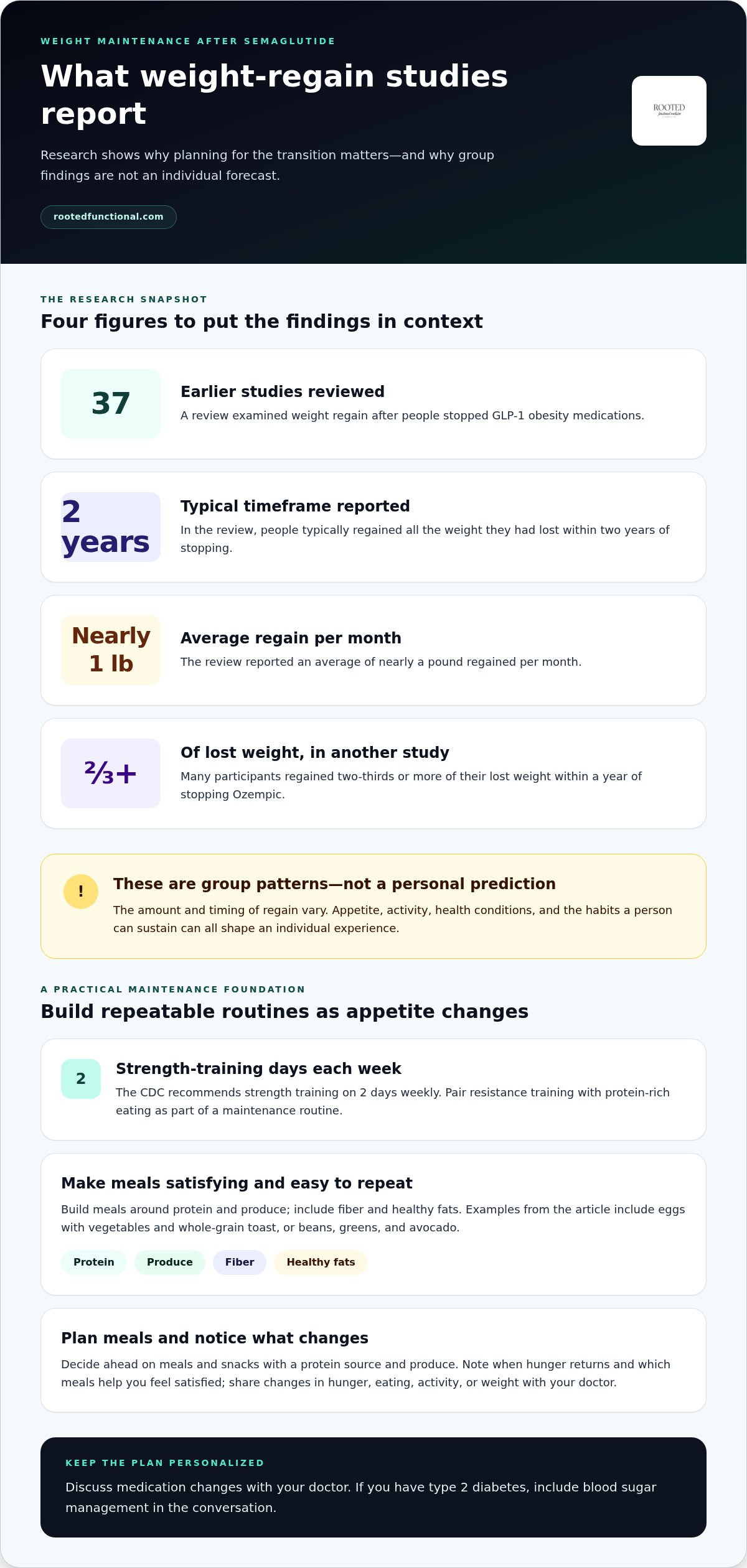
Protein, produce, fiber, and healthy fats can help make meals satisfying. For example, pair eggs with vegetables and whole-grain toast, or add beans, greens, and avocado to a bowl. After stopping Ozempic, appetite may increase as the medication’s effects fade. Filling meals can help you respond to hunger with a satisfying routine rather than relying on very large portions.
Protein Intake and Resistance Training
Protein-rich eating paired with resistance training supports a maintenance routine that includes both food and movement. Build meals around options such as eggs, beans, fish, or poultry, then add vegetables or fruit. The Centers for Disease Control and Prevention recommends that adults do strength training on 2 days weekly. This can make resistance work a practical part of a healthy lifestyle as you adjust to changes in appetite.
Meal Planning for Weight Maintenance
Meal planning means deciding in advance which satisfying meals and snacks you’ll have, including a protein source and produce. A consistent schedule might mean eating every few hours instead of skipping meals and arriving at the next one overly hungry. For example, plan yogurt and fruit, followed by a meal with chicken, vegetables, and whole grains. This structure can make protein-rich eating easier to repeat.
Start with a simple plan for a few familiar meals. Choose ingredients you enjoy, such as lentils, leafy greens, nuts, or salmon, and keep them on hand for quick combinations. If changes in appetite make portions or meal timing feel unfamiliar, note when hunger returns and which meals keep you satisfied. These observations give you and your doctor useful details for adjusting your approach.
Weight maintenance doesn’t require perfect eating. Focus on habits you can repeat: planned meals, a protein source, produce, and movement that fits your routine. If old patterns are making weight harder to manage, identify the specific obstacle, such as missed meals, limited time to cook, or less activity. Addressing one practical barrier can make the next healthy choice easier.
People asking how to get off Ozempic without gaining weight can start by discussing the transition with their doctor. Share your eating routine, activity level, changes in hunger, and any concerns about weight. These details help shape a realistic plan. If you have type 2 diabetes, include blood sugar management in that conversation, since changes after stopping can affect both weight and glucose.
Weight regain after stopping semaglutide
After you stop semaglutide, its effects fade over time. As appetite suppression lessens, feelings of fullness can change and weight regain may begin. The pace varies, but stopping Ozempic doesn’t automatically erase your progress. It does mean the routines and treatment plan supporting weight maintenance need attention.
Research points to a meaningful risk. A review of 37 earlier studies, published online on January 7, 2026, found that people stopping GLP-1 obesity medications typically regained all the weight they lost within two years. People regained an average of nearly a pound per month. Another study found that many regained two-thirds or more of their lost weight within a year of stopping Ozempic. These findings describe group patterns, not a precise forecast for one person.
Why can weight return? Semaglutide reduces appetite and slows digestion while you take it. After stopping, those effects diminish, hunger can return, and it may become harder to maintain the eating patterns that supported weight loss. Returning to previous habits can increase the likelihood of regain. The amount and timing vary with factors such as appetite, activity, health conditions, and the habits you can sustain.
Other weight-loss medications may be considered for weight maintenance, but they aren’t interchangeable or suitable for everyone. A doctor can consider your health conditions, treatment history, goals, and potential medication risks when discussing options. Semaglutide and tirzepatide are often intended for long-term or lifelong use, though that may not always be possible. Medication changes should be part of a supervised plan, not a response to weight regain made alone.
If your weight starts increasing, contact the prescribing doctor and describe when the change began, how your hunger has shifted, and whether your eating or activity routines changed. Ask whether a gradual taper, a lower dose, or intermittent use is appropriate. A doctor may reduce a dose gradually to assess whether weight remains stable without medication. Don’t restart semaglutide or change the dose on your own. The decision should account for why treatment stopped and your current health.
Weight regain after stopping medication doesn’t mean the effort to lose weight was wasted. It signals that the biological support has changed and the maintenance strategy may need revisiting. Semaglutide is often used as long-term treatment, so planning for what comes next matters before the final dose. Discuss weight trends and blood sugar concerns with your doctor, especially if you take Ozempic for type 2 diabetes.
If you’re weighing medication changes or responding to regain, a personalized weight-management consultation can help you discuss a plan suited to your health history and goals.
Setting realistic expectations for weight maintenance
After stopping semaglutide, aim to minimize weight regain rather than expect to avoid it entirely. A workable maintenance plan combines repeatable eating habits, movement, and follow-up.
Diet and Exercise for Weight Maintenance
A maintenance routine pairs nourishing meals with regular movement to support the changes you’ve made. Build meals from satisfying foods, then choose activity you can repeat, such as walking after dinner. These habits matter because the medication’s effects may fade as appetite returns. If diabetes affects your food choices or activity plans, include blood sugar needs in discussions with your healthcare team.
Physical Activity After Weight Loss
Physical activity includes planned exercise and everyday movement, while aerobic exercise raises your breathing and heart rate. The Centers for Disease Control and Prevention recommends that adults get at least 150 minutes of moderate-intensity aerobic exercise weekly. Brisk walking, cycling, or dancing can contribute. Strength training also supports lean body mass, so combine movement types when they fit your abilities and routine.
Weight maintenance is an ongoing process, not a finish line tied to a particular scale reading. A gradual increase doesn’t erase the health benefits of weight loss. Focus on your habits and weight trend, then respond early if familiar patterns begin to return. For example, if workdays leave no time for a walk or planned meals, adjust the routine before it becomes your default.
People discontinuing weight-loss medication are advised to engage in 200 to 250 minutes of moderate-intensity physical activity each week. Treat that range as a goal to work toward, not a reason to abandon movement if you currently do less. A brisk walk during lunch, a bike ride, or an active commute can help build consistency. A dietitian can also help align food choices with your preferences and health needs.
Make progress visible without letting one weigh-in dictate your choices. Track weight trends, activity, and eating patterns in a journal or notes app. After stopping medication, follow up with your primary care doctor every three months for weight and blood-work checks. Bring examples, such as fewer walks or changes in meal routines, so the conversation can focus on practical adjustments.
Stomach symptoms or diabetes-related concerns can affect what feels manageable. Choose activity that fits your energy and discuss blood sugar monitoring with your doctor if you have type 2 diabetes. If a long walk feels difficult, split movement into shorter periods across the day. Sustainable habits are specific: a planned route, a meal you can prepare, and a follow-up appointment on your calendar.
What happens to hunger and blood sugar after stopping Ozempic
As Ozempic’s effects fade, appetite and blood sugar can change. Tracking hunger, eating, activity, and glucose gives you useful details to discuss with your doctor.
Hunger and Fullness After Stopping Semaglutide
Semaglutide mimics GLP-1, a hormone released when you eat, and helps reduce appetite and slow digestion. After stopping, hunger cues, cravings, and feelings of fullness may shift as the medication’s effects wear off. You might notice wanting larger portions or feeling hungry sooner after meals. Those changes can affect eating patterns and weight, so noticing them early can help you plan meals that feel satisfying.
For example, jot down when hunger returns, what you ate, and how long you felt full. Note changes after breakfast, lunch, and dinner instead of relying on memory. If a medication caused side effects, discuss them with your doctor; dose adjustments or dietary changes may help while treatment continues. Wegovy also contains semaglutide, so appetite effects can change after stopping that medication too.
Blood Sugar After Stopping Ozempic
Ozempic can lower blood sugar, so glucose may rise as its effects fade. This matters especially for people taking it to manage type 2 diabetes, because changes in appetite and eating can also affect glucose readings. Don’t treat increased hunger as the only signal. Blood sugar monitoring helps reveal changes that may not feel obvious from day to day.
Record glucose readings as directed, alongside meals, activity, and medication changes. For instance, note whether a reading followed a meal or a walk. Share those details with your doctor when discussing stopping Ozempic. A clinician can use the pattern to review diabetes management and determine whether your treatment plan needs adjustment.
Monitoring Weight and Blood Sugar
Monitoring means recording weight trends and checking blood sugar as part of a follow-up plan. After stopping weight-loss medication, people are advised to see their primary care doctor every three months for weight and blood-work checks. If you have type 2 diabetes, your doctor should monitor your blood sugar during the medication transition. Ask how often to check at home based on your diabetes treatment and readings.
Keep a simple log with the date, weight, glucose readings, meals, activity, and appetite changes. Bring it to follow-up visits so your doctor can compare patterns instead of relying on one reading. If you notice a lasting shift in hunger or glucose, record when it began and what changed in your routine. These details can make your next conversation more useful.
How weight-loss medications affect digestion and appetite
Ozempic affects more than the number on the scale. It mimics GLP-1, a hormone released when you eat, and can reduce appetite, lower blood sugar, and slow digestion. Those effects influence how quickly fullness arrives and how long it lasts. After stopping, the medication’s effects wear off over several weeks, and hunger cues or cravings may return.
Slower digestion can change how eating feels while treatment is active. A smaller meal may feel satisfying, and familiar portions may feel different. As the effect fades, fullness can shift again. For example, lunch may no longer keep you comfortable through the afternoon. That change isn’t a failure of willpower. It reflects a changing medication effect and can alter the eating patterns that supported weight management.
Appetite and digestion also affect each other. If meals once kept you full for longer, returning hunger may prompt extra snacks or larger portions. Notice the pattern without judging yourself: record what you ate, when hunger returned, and whether fullness changed. That record can help you distinguish a temporary appetite shift from a routine that’s becoming difficult to sustain. It also gives you clear examples to discuss with your doctor.
Side effects matter too. If a weight-loss medication causes symptoms that make eating difficult, discuss them with your doctor rather than changing the dose yourself. Your doctor may suggest a lower dose or dietary changes. For example, describe which meals feel uncomfortable, when symptoms occur, and how they affect your daily eating. Those details can help shape a response around your experience and treatment plan.
Stopping a weight-loss medication doesn’t affect appetite or digestion the same way for everyone. Pay attention to how meals, fullness, hunger, and weight trends relate. If you begin to gain weight, look for practical changes that may explain it, such as more frequent snacking as fullness fades. Adjusting meal structure and activity can help minimize regain, while medication decisions remain a conversation with your doctor.
A useful takeaway: appetite is part of the medication’s effect, not a character test. Track changes, share side effects, and plan for the return of hunger instead of waiting until new habits feel entrenched. If you want support connecting appetite changes with a sustainable weight-management approach, book a consultation to discuss your weight-management goals.
Rooted Functional Medicine: Healing Neuropathy Webinar
Rooted Functional Medicine offers the Healing Neuropathy Webinar, while its Functional Weight Loss Program is more directly relevant to building a weight-maintenance plan. If appetite changes, weight concerns, or type 2 diabetes complicate your next steps, a Root Cause Consultation can help explore the health factors shaping your goals. The Type 2 Diabetes Reversal Program may also be relevant for people seeking support with type 2 diabetes through lab-based, integrative protocols.
These options can support a broader conversation about health and sustainable habits. They don’t replace medication decisions or blood sugar monitoring with your prescribing doctor. Bring your questions about weight trends, eating patterns, and glucose concerns so the discussion can focus on what matters to you.
Contact Rooted Functional Medicine or visit rootedfunctional.com to learn more.
Make your next step a supported one
The transition from medication is a chance to shape a maintenance plan around your real life, not an ideal routine you can’t sustain. If you’re asking how to get off Ozempic without gaining weight, bring specific questions to your prescribing doctor: what changes to watch for, how to track them, and which habits feel manageable. A written plan can make those conversations more focused and help you respond thoughtfully as your needs change.
You don’t have to figure out every detail at once. Choose one useful next step, such as recording your appetite patterns or discussing weight trends and blood sugar with your care team. If you want personalized support exploring your health goals, schedule a conversation with Rooted Functional Medicine.
Steady progress starts with a plan you can return to, one practical choice at a time.
Frequently Asked Questions
Is it possible to keep weight off after stopping semaglutide?
Yes, weight maintenance is possible, but it takes a plan that accounts for appetite changes after treatment. Keep routines practical: plan meals for busy days, choose movement you can repeat, and note changes in hunger or weight. If your schedule changes, adjust the routine rather than abandoning it. The aim is to limit regain and respond early when familiar habits become harder to maintain.
How should Ozempic be tapered or stopped safely?
Discuss stopping with the doctor who manages your treatment; don’t change your dose independently. Treatment changes should be planned with your doctor, because the right approach depends on your circumstances. These approaches aren’t suitable for everyone. Before changing treatment, discuss why you want to stop, how your appetite and weight have changed, and whether Ozempic is also managing type 2 diabetes.
Should Ozempic be stopped under a doctor's supervision?
Yes. Plan the change with your doctor, particularly if you take Ozempic for type 2 diabetes. The discussion should cover your reason for stopping, other health conditions, current blood sugar readings, and how you’ll track changes afterward. For example, bring a list of recent glucose readings and any appetite or weight changes. That information can help your doctor consider a safe, appropriate transition plan.
How much weight do people typically regain after stopping semaglutide, and how quickly?
Regain varies, but it can start after treatment ends and continue over time. Averages describe groups, not an individual’s exact outcome. Your weight trend can depend on appetite, eating and activity habits, health conditions, and your treatment plan. Track changes consistently rather than reacting to one measurement. If your weight is rising, share the trend and any routine changes with your doctor.
What diet helps maintain weight after stopping Ozempic?
Choose satisfying meals that combine protein, fiber-rich foods, produce, and healthy fats. For example, try lentils with vegetables and olive oil, or Greek yogurt with berries and nuts. Plan meals and snacks before a busy day so hunger doesn’t leave you relying on whatever is available. A dietitian can help adapt food choices to your preferences, diabetes needs, and daily routine.
What exercise plan helps prevent weight regain after stopping semaglutide?
Build a routine that combines aerobic activity and strength training. The Centers for Disease Control and Prevention recommends at least 150 minutes of moderate-intensity aerobic exercise weekly and strength training on 2 days weekly. Brisk walking and body-weight exercises are examples. Start with activities that fit your current ability, then build consistency. If diabetes or another health condition affects exercise, discuss an appropriate plan with your doctor.
How can blood sugar be managed after stopping Ozempic for type 2 diabetes?
Work with your doctor on blood sugar monitoring and any needed changes to your diabetes treatment plan. Ozempic can lower blood sugar, so readings may change after stopping. Keep a record of glucose results, meals, activity, and medication changes. For example, note whether a reading was before or after eating. Share the record at follow-up so your doctor can assess patterns and guide next steps.
What symptoms or risks can occur when stopping Ozempic?
Hunger, cravings, and weight gain can return as the medication’s effects fade; blood sugar may also rise. Appetite and fullness can shift, changing how satisfying familiar meals feel. If you have type 2 diabetes, monitor glucose as your doctor advises and report concerning changes. If you’re stopping because of side effects, discuss them with your doctor before changing your dose or treatment.