Functional Medicine Visit: What Happens at Your First Appointment
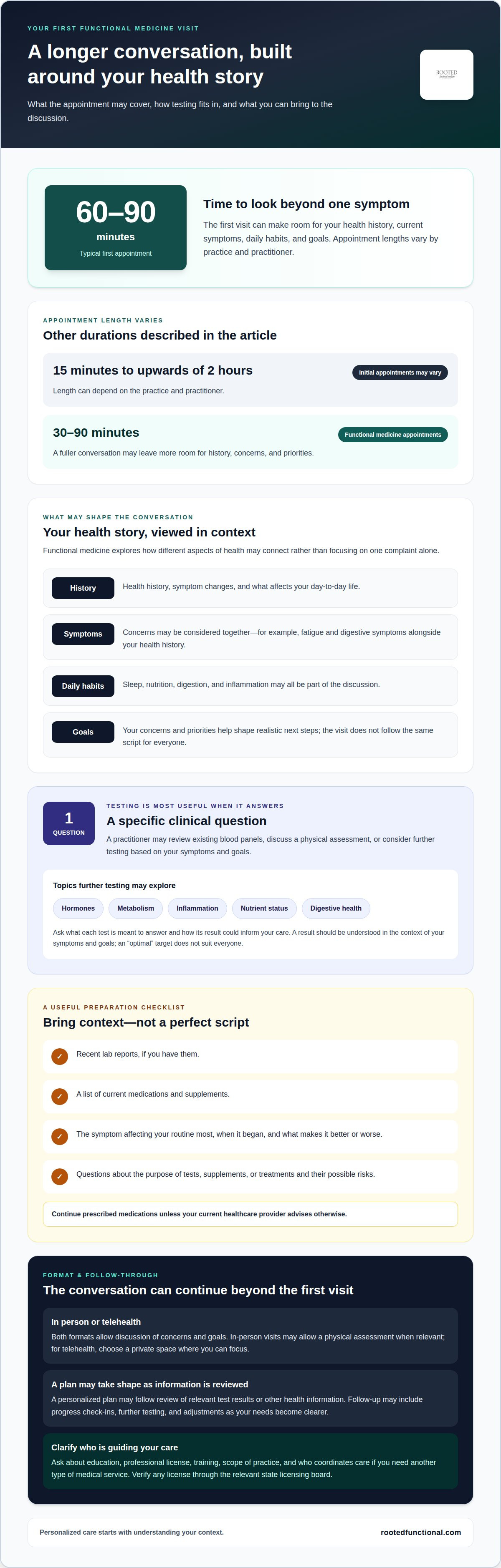
Your symptoms deserve more than a quick conversation about what to suppress. Knowing what to expect from your first functional medicine visit starts with the time involved: a first appointment typically lasts 60 to 90 minutes. It’s a chance to look at your health history, symptoms, daily habits, and goals in context, then discuss what information may help guide next steps.
If you’ve left appointments feeling rushed or unheard, it makes sense to want a clearer picture before you begin. Functional medicine takes a broader, individualized approach, exploring how different aspects of health may connect rather than focusing on one symptom alone. That doesn’t mean every visit follows the same script. Your concerns and health goals shape the conversation, and a physical assessment or discussion of lab testing may be part of it.
Here, you’ll learn what functional medicine means, what may happen during an initial appointment, and how long it can take. You’ll also see how goals, testing, follow-up, and the care approach can differ from a conventional visit, so you can arrive with a better sense of the process and the questions that matter to you.
Table of Contents
What is Functional Medicine?
Understanding what to expect from your first functional medicine visit begins with the approach: it considers how health history, symptoms, and daily habits may connect. Rather than treating one complaint alone, a practitioner may discuss sleep, nutrition, digestion, and inflammation together. Functional medicine as practiced today emerged in the late 20th century, drawing on systems biology, molecular medicine, and science-based natural medicine. For example, fatigue and digestive symptoms may be explored alongside your health history.
Conventional laboratory tests compare results with a reference interval based on a defined population. A practitioner may also discuss how a result relates to your symptoms and health goals. Some practitioners use narrower interpretive ranges, sometimes called functional ranges, but these do not replace the laboratory’s reference interval. “Optimal” does not mean one target suits everyone. Ask what a result means in your context and whether it could affect your next steps.
A physical assessment may be part of the first visit, depending on your symptoms and goals. The practitioner may review blood panels, then discuss whether further testing could clarify questions about hormones, metabolism, inflammation, nutrient status, or digestive health. Testing is most useful when it addresses a specific clinical question. For example, a digestive concern may prompt discussion of relevant tests, while fatigue may lead first to a review of symptoms and existing results.
Functional testing uses different methods to investigate specific concerns. Rooted Functional Medicine uses advanced functional lab testing to guide personalized protocols. Ask what question each test is meant to answer and how the result could inform your care. Bring recent lab reports and a list of current medications and supplements. Continue prescribed medications unless your current healthcare provider advises otherwise. This context makes the discussion more relevant.
What are the risks of functional medicine tests, supplements, or treatments? Testing can produce confusing results or prompt unnecessary follow-up if it isn’t tied to a clear health question. Supplements and treatments can also cause side effects or interact with medications. Discuss their purpose and risks with a qualified healthcare professional before making changes.
How do you check a functional medicine practitioner’s credentials? Ask about their education, professional license, and training, then verify any license through the relevant state licensing board. Clarify their scope of practice and who coordinates care if you need another type of medical service. Knowing who is guiding your care and how their training fits your needs is part of understanding what to expect from your first functional medicine visit.
How long is a typical initial appointment?
A first functional medicine appointment typically lasts 60 to 90 minutes, although appointment lengths vary by practice and practitioner. That time allows a fuller conversation than a brief symptom-focused visit.
Appointment Length and Personal Attention
Initial appointments may range from 15 minutes to upwards of two hours, while functional medicine appointments can last 30 to 90 minutes. The length depends on the practice and practitioner. A longer visit can leave room to discuss your health history, concerns, and priorities without compressing every topic into a few minutes.
Personal attention is about more than the clock. It also depends on how the appointment is used. Your practitioner may ask follow-up questions about how a symptom has changed or how several concerns affect your daily life. For example, explain what makes fatigue worse, when it began, and how it affects work or sleep. Those details help make the conversation specific to you.
Your initial consultation covers your health story, so consider which concerns matter most before the appointment. You might note the symptom affecting your routine most, a change you’ve noticed, and what you hope to understand. This isn’t a script you must follow. It’s a way to keep a pressing concern from getting lost as the conversation unfolds.
In-Person and Telehealth Visits
Functional medicine appointments may take place in person or through telehealth. Both formats give patients a chance to discuss concerns and goals with a practitioner. The format can shape how the visit works, so know whether you’ll be meeting at a clinic or joining remotely before planning your day.
For an in-person appointment, allow time for travel and arrival. For telehealth, choose a private space where you can speak comfortably and focus on the conversation. Keep any notes you want to discuss nearby. These simple preparations can help you use the appointment well, whether you’re sitting across from a practitioner or speaking through a screen.
Format doesn’t determine the appointment length on its own. A detailed initial conversation still needs time, and the practitioner may adapt the process to your needs. If a concern calls for a physical assessment, an in-person visit may allow that assessment as part of the appointment. The focus remains on understanding your situation and deciding what information or next steps are relevant.
Choose the format that works with your circumstances and makes it easier to take part in the discussion. If you’re ready to arrange an initial appointment, you can book a functional medicine visit.
Setting health goals and discussing lifestyle habits
Health goals help connect your concerns with changes you can track in daily life. Instead of aiming for a broad outcome like “feel better,” describe what that would look like: having energy for an evening walk, sleeping through the night, or managing meals without digestive discomfort. These examples give the conversation a practical focus and help distinguish what disrupts your routine from what matters less right now.
Your practitioner may review your medical and family health history to understand the context around your current health. Be ready to discuss when symptoms began, how they have changed, and whether anything makes them better or worse. Family patterns can also be relevant. Mention close relatives’ conditions you know about, along with past diagnoses, procedures, or significant changes in your health. A clear timeline can make details easier to discuss.
Questions about lifestyle help describe a typical day, not judge whether you’re doing everything “right.” You might talk about meals, sleep, movement, stress, work routines, and how symptoms affect those activities. For example, explain whether low energy changes your exercise habits or whether certain routines interfere with sleep. Specific examples help your practitioner understand how your environment and habits fit into your health picture.
What should you bring to your first functional medicine appointment? Gather medical records, recent lab results, and a current list of medications and supplements. You can also write down your main symptoms, when they occur, and the health goals you want to discuss. Continue prescribed medications and supplements unless your current healthcare provider advises otherwise.
Your practitioner’s evaluation draws on your account of symptoms, health history, and relevant clinical information. They may ask follow-up questions to clarify how symptoms affect your routine or whether changes followed a particular event. If you have several concerns, name the one that most affects daily life first. Then describe related symptoms, such as poor sleep alongside fatigue, to give the discussion a useful starting point.
A personalized action plan often takes shape after additional information, such as lab results, has been reviewed. The first conversation may help identify priorities and clarify what information is still needed, rather than settle every question immediately. Once your history and results are considered together, next steps can be tied to your goals. A plan may focus on one manageable lifestyle change and build from what you learn about your response.
Follow-up care and provider relationships
The first appointment begins a process of reviewing information, refining questions, and adjusting care around your progress. A personalized plan often follows review of relevant lab results. Test findings and your reported symptoms can then be considered together before next steps are chosen. The plan may evolve as new information clarifies which factors deserve attention.
Follow-up care may include progress check-ins, additional testing, and adjustments to your plan. For example, you might discuss whether a nutrition change feels manageable, whether a symptom has shifted, and what questions remain. Those details make follow-up specific. A check-in isn’t simply a repeat of the first conversation; it lets you compare your current experience with the goals and concerns identified earlier.
Testing is most useful when it helps answer a health question. If results don’t explain a concern, the next discussion can explore other possible causes instead of treating one finding as the whole story. If a result points to a factor worth addressing, your practitioner can explain how it relates to your symptoms and what action may follow. Ask what each test is meant to clarify and how the answer could affect your plan.
The provider relationship also depends on clear communication. Bring new symptoms, changes in your routine, and questions about recommended steps to each follow-up. For instance, if a lifestyle adjustment conflicts with your work schedule, explain the barrier. Your practitioner can use that information to consider a practical adjustment rather than assume the original plan still fits your day-to-day life.
Progress may involve more than one measure. A symptom diary can help you describe patterns, such as when discomfort appears or how your energy changes during the day. Pair those observations with relevant test results and your own priorities. This gives you and your practitioner concrete details to discuss, while keeping the focus on your lived experience rather than treating a lab value as the only marker of change.
Root-cause care is an investigative process, not a promise that one test will reveal a single answer. Health concerns can have several contributing factors, and new information may reshape the working picture. Use follow-up conversations to ask what has been learned, what remains uncertain, and why a suggested next step fits your goals. A clear explanation helps you take part in decisions and understand how your plan may evolve.
How functional medicine differs from conventional visits
The difference often lies in the scope and structure of the conversation. Conventional healthcare visits may focus on a specific preventive screening or sick visit. Functional medicine takes an individualized approach, making room to explore health concerns in more context. Neither description fits every appointment, but the contrast helps explain why your first visit may feel different.
In a brief visit for a specific concern, the conversation may focus on that immediate issue. For example, someone with a new cough may discuss its onset and symptoms. A functional medicine practitioner may also ask how the concern fits with other symptoms, health history, or daily routines. That broader inquiry can help organize questions, though it doesn’t mean every symptom has one shared cause.
Time and attention can differ, too. A short screening typically centers on its immediate purpose, while an initial functional medicine consultation makes room to discuss your priorities. You can describe when concerns began, how they change, and which activities they affect. The practical difference is a fuller picture to consider, not an automatic diagnosis or guaranteed answer.
Testing is another point of distinction. In any setting, a test is useful when it relates to a clinical question. A functional medicine practitioner may discuss testing for hormone balance, metabolism, inflammation, nutrient status, or digestion. The key question is how a result connects with your symptoms and whether it could influence next steps. More testing alone doesn’t equal better care.
The care process can also unfold differently over time. Conventional visits may address a specific screening or illness, while functional medicine can include follow-up, review of additional results, and adjustments based on progress. For example, a practitioner might revisit a goal after reviewing new diagnostic information. That creates a process that can respond to what the patient reports and what the results show.
These approaches don’t have to be treated as opposites. You can use conventional healthcare for preventive screening or an acute concern while exploring a broader view of ongoing symptoms. Clear communication matters: share relevant test results and explain the care you’re receiving. That context helps each provider understand your concerns and avoids discussing one piece of your health in isolation.
The clearest takeaway is that functional medicine places more emphasis on connecting your history, concerns, and goals across the care process. If you want to discuss a personalized approach to ongoing health concerns, book a functional medicine appointment.
Rooted Functional Medicine: Healing Neuropathy Webinar
Rooted Functional Medicine’s Healing Neuropathy Webinar is an educational next step if you’re exploring possible contributors to neuropathy. It can help you consider questions to bring into a care conversation, including how symptoms affect daily life and what you hope to understand. For an individualized discussion of your health concerns, book a Root Cause Consultation. The right option depends on whether you’re seeking general education or a conversation focused on your situation.
Rooted Functional Medicine also offers programs for autoimmune concerns and Type 2 diabetes. These options connect a broader functional medicine approach with specific health challenges, rather than treating every reader’s needs as identical. If you’d like to explore which next step fits your concerns, contact Rooted Functional Medicine.
Take the Next Step With Clarity
You don’t need every symptom explained before starting a thoughtful health conversation. Bring your questions, describe what is affecting your daily life, and share what you hope will change. Those details help turn a broad concern into a focused discussion about your priorities and possible next steps.
Knowing what to expect from your first functional medicine visit can make it easier to decide whether this approach fits what you’re looking for. The next step is a conversation about your health and goals. Rooted Functional Medicine offers a Healing Neuropathy Webinar, a Root Cause Consultation, and an Autoimmune Solutions Program for people exploring support related to those concerns.
If you’re ready to talk through your health goals, contact Rooted Functional Medicine. You can take the process one question at a time, with your priorities at the center.
Frequently Asked Questions
Do I need to stop my current medications before the visit?
No. Continue prescribed medications and supplements unless your current healthcare provider advises otherwise. Bring a written list of each medication or supplement and how you take it, so your practitioner can consider it during the conversation. Don’t change a dose or stop a prescription simply to prepare for an appointment. If you’re concerned about a specific medication, note your question and discuss it with the clinician who manages it.
Will I receive a treatment plan at my first visit?
Not necessarily. Your practitioner may identify priorities and discuss possible next steps, but a complete plan may follow review of lab results or other relevant information. If your symptoms and existing records leave important questions unanswered, for example, the next step may be to gather more information before choosing an approach. Ask what the initial discussion clarified, what still needs review, and how those findings will shape decisions.
What happens during a first functional medicine visit?
The appointment usually centers on understanding your health concerns and what you want help with. You may discuss your medical background, symptoms, daily routines, and relevant test results. Depending on your situation, the practitioner may perform a physical assessment or discuss testing. For a remote visit, keep records and notes accessible, and choose a private place where you can speak openly about your health.
How long does a first functional medicine appointment last?
A first visit typically lasts 60 to 90 minutes, though appointment length varies by practice and practitioner. That range can allow more time for a detailed health discussion than a brief screening. If you have several concerns, note the ones that most affect daily life so you can raise them early. Leave room afterward to record recommendations or questions you want to follow up on.
What questions will a functional medicine practitioner ask?
Expect questions that clarify the pattern and impact of your symptoms. Your practitioner may ask when a concern started, what seems to trigger it, and how it affects sleep, work, meals, or movement. They may also ask about past diagnoses and family health patterns. A concrete example helps: explain whether a symptom appears after a meal, during a stressful period, or at a particular time of day.
Will I need blood tests or other lab tests at my first visit?
Not everyone needs testing during the first appointment. The practitioner may review recent blood work or discuss whether additional testing could help answer a specific health question. Possible areas of investigation include hormones, metabolism, inflammation, nutrient status, or digestion. The type of test depends on the concern being explored. If you arrive for a morning visit, fasting labs may be an option when appropriate.
Does health insurance cover functional medicine visits and testing?
Coverage varies by insurance plan, visit type, and testing ordered, and some care or tests may involve out-of-pocket expenses. Insurance does not cover Rooted Functional Medicine’s services. Before making care decisions, consider which parts of an approach matter to you, such as consultations or lab testing, and review your plan’s terms for any services outside this practice. Don’t assume a test or visit will be reimbursed.
How is functional medicine different from conventional primary care?
Functional medicine takes a broader, individualized approach to ongoing concerns, while conventional primary care may focus on a specific sick visit or preventive screening. The approaches can serve different needs and may complement each other. For example, continue using primary care for routine preventive needs while discussing persistent symptoms through a wider health-history lens. Share relevant test results and current care details so each practitioner has useful context.