Foods to Eat and Avoid for Peripheral Neuropathy
The best diet for peripheral neuropathy emphasizes vegetables and fruit, whole grains, lean proteins, and healthy fats, while limiting highly processed foods and refined sugars. For diabetic neuropathy, balanced meals and mindful carbohydrate choices can support steadier blood sugar, an important part of nerve health. Food can support care, but it cannot replace clinical treatment.
It can be frustrating to make changes and still wonder what’s actually helping. A thoughtful eating plan can give your body important nutrients, but the right approach depends on your health needs and the cause of your symptoms. Here, you’ll find practical foods to include, what to limit with diabetic neuropathy, and how nutrients such as B vitamins and omega-3 fats fit into a balanced diet. You’ll also learn why nutrition works best alongside clinical care, not as a replacement for finding and addressing the factors contributing to nerve symptoms.
Table of Contents
1. Green leafy vegetables and nerve health
Spinach, kale, broccoli, and asparagus bring variety to meals and provide nutrients used in normal body functions. Broccoli, spinach, and asparagus contain B vitamins associated with nerve function. Add them to eggs, soups, grain bowls, or a side salad. Aim for half- or full-cup servings of plant foods every day. The Foundation for Peripheral Neuropathy recommends 5–10 servings of colorful fruits and vegetables daily. These foods support a balanced dietary pattern, not a stand-alone treatment for nerve damage.
Build meals around vegetables, fruit, whole grains, and protein rather than relying on one “nerve-healing” ingredient. For example, pair spinach with beans and brown rice, or serve broccoli with fish and potatoes. Leafy greens, nuts, seeds, and whole grains also provide magnesium, which supports many body processes, including muscle and nerve function. A varied plate helps you get nutrients from food while keeping meals balanced for blood sugar.
Plant-based eating can include foods that supply key nutrients, but vegetarian and vegan diets need attention to vitamin B12. B12 supports nerve function and the production of myelin, the protective covering around nerves. Meat, fish, eggs, and dairy provide B12. People avoiding animal foods can choose fortified foods or supplements to meet their needs. Check food labels for B12 fortification, since plant foods do not naturally provide reliable amounts.
Can vitamin B6 excess or other nutrient deficiencies cause or worsen neuropathy? Yes. Low or excessive levels of B vitamins, including thiamine, B6, and B12, can contribute to peripheral neuropathy. Too much B6 from supplements can harm nerves, so avoid high-dose supplements unless specifically indicated. A healthy diet can help address inadequate intake, while testing can identify a particular deficiency that needs attention.
Are there dietary recommendations for neuropathy caused by chemotherapy, alcohol use, or other conditions? A whole-food pattern with vegetables, fruit, whole grains, lean protein, and healthy fats offers a practical foundation, but it does not replace care for the underlying cause. Heavy alcohol intake can harm nerves and worsen neuropathy, so limiting excess alcohol matters. One eating plan cannot address every cause in the same way.
Start with one manageable change: add spinach to breakfast, include broccoli at dinner, or choose fortified foods if you avoid animal products. Keep meals varied rather than depending on a single green or vitamin. If you use supplements, review the ingredients and amounts with a healthcare professional, especially for B6. The best diet for peripheral neuropathy supports overall nutrition while leaving room to investigate deficiencies, blood sugar concerns, and other contributors to symptoms.
2. What Not to Eat for Diabetic Neuropathy?
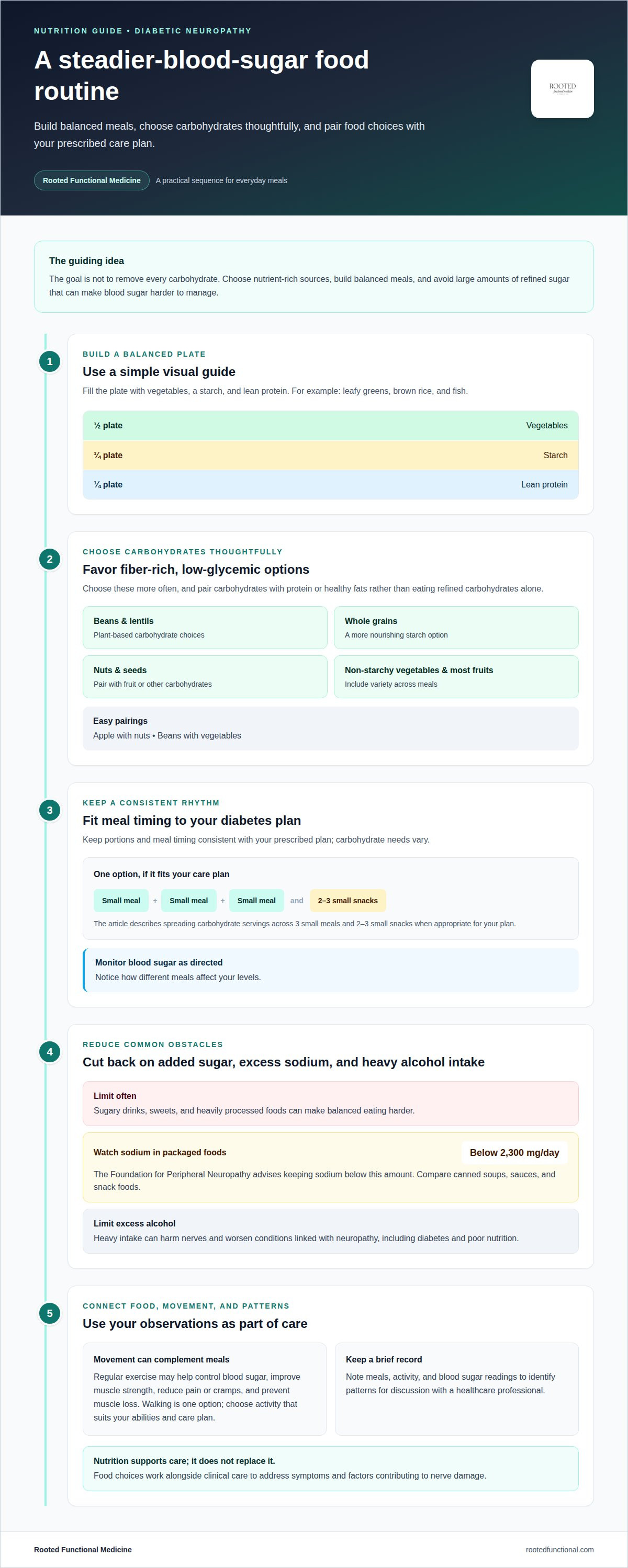
With diabetic neuropathy, blood sugar management matters alongside food choices. Poor glycemic control can worsen symptoms over time, while maintaining healthy blood sugar may help limit further nerve damage. Start by cutting back on sugary drinks, sweets, and heavily processed foods that can make balanced eating harder. These foods are not the only factor, but choosing them often can displace vegetables, whole grains, and other nourishing options. Eating in a way that supports steadier blood sugar can also support overall nerve function.
Choose low-glycemic foods more often, such as beans, lentils, nuts, seeds, non-starchy vegetables, whole grains, and most fruits. Pair carbohydrates with protein or healthy fats, such as an apple with nuts or beans with vegetables. This makes meals more balanced than eating refined carbohydrates alone. Keep portions and meal timing consistent with your prescribed diabetes plan, since carbohydrate needs vary. Monitor blood sugar as directed and note how different meals affect your levels.
A simple plate can make meal planning more concrete: fill half with vegetables, one-quarter with starch, and one-quarter with lean protein. For example, serve leafy greens with brown rice and fish. Spread carbohydrate servings across 3 small meals and 2–3 small snacks if that fits your care plan. The goal isn’t to remove every carbohydrate. It’s to choose nutrient-rich sources and avoid large amounts of refined sugar that can make blood sugar harder to manage.
Alcohol also deserves attention. Heavy intake can harm nerves and worsen conditions linked with neuropathy, including diabetes and poor nutrition. Limit excess alcohol rather than treating it as a harmless part of a meal. Highly salted packaged foods are another practical item to reduce. The Foundation for Peripheral Neuropathy advises keeping sodium below 2,300 mg per day. Compare choices such as canned soups, sauces, and snack foods, since sodium can add up across meals.
Movement can complement dietary changes. Regular exercise may help control blood sugar, improve muscle strength, reduce pain or cramps, and prevent muscle loss. Walking is one option; choose activity that suits your abilities and care plan. Pair movement with regular meals and blood sugar monitoring, especially if your prescribed diabetes plan includes specific instructions about activity. Exercise does not replace food choices or clinical care, but it can support the same blood sugar goals.
Consistency is more useful than a restrictive menu. Keep a brief record of meals, activity, and blood sugar readings to identify patterns for discussion with a healthcare professional. If you need help connecting meal choices with diabetes and nerve symptoms, explore personalized clinical support. A plan can account for your current diet, blood sugar levels, symptoms, and prescribed treatment without assuming one menu suits everyone.
3. Anti-inflammatory foods and omega-3 fatty acids
Food choices can support a dietary pattern that addresses inflammation while providing nutrients for nerve health. Omega-3 fatty acids are found in fatty fish and several plant foods. They may help ease neuropathic pain and support nerve regeneration through anti-inflammatory effects. They aren’t a replacement for treatment, but they can be part of a broader plan. Salmon, mackerel, sardines, flaxseed, chia seeds, and walnuts offer practical ways to include these fats.
For fish, aim for two servings each week. A serving of salmon or mackerel can be about 3–4 ounces. Sardines are another option, served with vegetables or added to a meal. If fish isn’t part of your diet, use plant sources instead. Stir ground flaxseed into oatmeal, add chia seeds to yogurt, or include walnuts with breakfast. These simple choices can make omega-3 foods easier to eat regularly.
Ground flaxseed is suggested at 1–2 tablespoons daily. Grinding helps make its nutrients more accessible. Sprinkle it over cereal, blend it into a smoothie, or mix it into cooked oatmeal. Chia seeds can be stirred into overnight oats, while walnuts work in salads or as a snack. Choose a format you enjoy, then incorporate it into meals consistently rather than relying on an occasional serving.
Colorful fruit can complement these food sources. Berries, peaches, cherries, red grapes, oranges, and watermelon contain antioxidants associated with reducing inflammation and nerve damage. Grapes, blueberries, and cranberries also contain resveratrol, a compound with anti-inflammatory properties. Sweet potatoes provide vitamins A and C along with natural anti-inflammatory compounds. Try berries with breakfast, orange slices as a snack, or roasted sweet potato with dinner.
A practical meal might combine salmon, roasted sweet potato, and vegetables. For a plant-based meal, add ground flaxseed to oatmeal and serve lentils with greens and walnuts. These examples bring together omega-3 sources and colorful produce without depending on a single food. Keep variety in mind. A range of foods contributes different nutrients, while meal choices can also support blood sugar and overall dietary balance.
Food is one part of nerve care. Symptoms and their causes differ, so the effects of dietary changes may vary. Pairing nutrient-rich meals with other care and lifestyle habits keeps the focus broader than any single ingredient. Start with one repeatable change, such as adding sardines to a weekly meal or ground flaxseed to breakfast. Notice what fits your routine, and build from there.
4. Vitamin D, calcium, alpha-lipoic acid, and magnesium
Vitamin D and calcium come up often in nutrition discussions, but neither should be treated as a stand-alone neuropathy remedy. Fatty fish, egg yolks, and fortified dairy products provide vitamin D. Fortified dairy can also contribute calcium. Food sources fit into a varied eating pattern, while a supplement decision depends on an identified need and the person’s overall health. A doctor can consider diet, symptoms, medications, and test results before recommending supplements.
Alpha-lipoic acid is an antioxidant found in spinach, broccoli, organ meats, and certain yeasts. It may help ease neuropathic pain and support nerve function, particularly for people with diabetic neuropathy. One study described 600 mg orally each day as having an optimal risk-to-benefit ratio. That study dose is not a personal dosing instruction. Concentrated supplements differ from foods, so discuss their use with a doctor before adding one.
Leafy greens, nuts, seeds, and whole grains provide magnesium. Include them in meals by adding pumpkin seeds to oatmeal or beans to a grain bowl. Zucchini also provides magnesium and potassium. These minerals are associated with nerve transmission, and magnesium may help calm excited nerves. Including several food sources is more practical than relying on one ingredient.
B vitamins and magnesium serve different roles, so taking a combined supplement without a clear reason can miss the underlying issue. Vitamin B1, B6, and B12 are associated with nerve health, and both low and excessive B-vitamin levels can contribute to neuropathy. Alcohol can worsen nerve problems and poor nutrition. If alcohol use or a restrictive diet affects nutrient intake, focus on identifying the specific gap instead of adding several supplements at once.
Are supplements such as B12, alpha-lipoic acid, or omega-3s effective for neuropathy, and what are the risks? B12 may help when a deficiency is present, while alpha-lipoic acid and omega-3s may support symptoms for some people; results depend on the cause and nutrient status. Excessive B6 and zinc supplements can harm nerves, so review supplements with a doctor, especially if you take medication or have a chronic condition.
For a practical starting point, include fortified dairy or another suitable source of vitamin D, whole grains, and magnesium-rich foods in meals. Review supplements and test results with a clinician before changing doses. This keeps food-based nutrition distinct from treatment decisions while taking nerve health, symptoms, and overall needs into account.
5. Diet's role alongside clinical treatment
Nutrition can support nerve health, but food alone may not address every cause of neuropathy symptoms. A varied eating pattern that includes fruits, vegetables, fish, nuts, and whole grains can support healthy weight and provide nutrients. Berries and other colorful produce contain antioxidants, while nuts and greens contribute magnesium. For diabetic neuropathy, balanced meals can also support blood sugar management. These choices complement clinical care, not replace evaluation of persistent symptoms or diabetes treatment.
Diet may also affect digestion when nerve damage changes intestinal muscle contractions. Meals built around vegetables, whole grains, and protein provide structure without relying on highly processed foods. Adequate hydration supports nerve function and may help minimize tingling and numbness. Keep water accessible through the day, and note whether nausea, constipation, or other digestive changes affect eating and drinking. These symptoms deserve attention as part of the overall clinical picture.
Testing can make nutrition decisions more specific. When laboratory testing identifies a deficiency, a clinician may recommend a targeted supplement rather than a broad mix. B vitamins are best obtained through whole foods when possible, while blood work and symptom severity can guide whether supplementation is appropriate. This matters because excessive vitamin B6 and zinc supplements can harm nerves. A documented deficiency, symptoms, current medications, and existing health conditions all help shape the next step.
When should someone with neuropathy get nutritional testing or see a doctor before changing their diet? Seek medical evaluation promptly for persistent neuropathy symptoms, a foot injury that is not healing, or changes in digestion, urination, or sexual function. Before starting supplements or making major dietary changes, discuss them with a healthcare professional, especially if you take prescription medication or have a chronic condition.
Clinical care and daily habits can address different parts of the problem. Keeping a food record can help you connect meals with symptoms, digestive changes, and blood sugar readings. Bring the record, a list of supplements, and questions about specific nutrients to an appointment. If appetite or food restrictions limit your choices, mention examples such as avoiding dairy or following a vegan diet. These details can guide testing and make nutrition recommendations more relevant to your needs.
Nutrition is one part of a broader plan that may also include medical treatment and lifestyle changes. A clinician can consider the underlying cause, test results, symptoms, and current treatment before recommending next steps. For individualized support connecting nutrition with neuropathy symptoms, schedule a conversation about your care. A clear plan helps prevent guesswork, identifies nutrient concerns, and keeps food changes aligned with clinical treatment.
Rooted Functional Medicine
Rooted Functional Medicine can help you look beyond food choices and explore factors that may contribute to neuropathy. A Root Cause Consultation and Neuropathy Root Cause Testing can support a more individualized understanding of symptoms, while nutrition choices remain part of care. If diabetes is part of your health picture, the Type 2 Diabetes Reversal Program may also be relevant. The goal is to connect the questions raised by your symptoms, nutrition, and health history with a clearer next step.
If you’re ready to discuss your concerns and possible next steps, contact Rooted Functional Medicine.
Take the Next Step Toward Nerve-Health Support
Choosing the best diet for peripheral neuropathy is a starting point, not a complete plan. Connect daily food choices with the questions your symptoms raise. Consider what has changed, what remains difficult, and what you want help understanding. This gives a clinical conversation a clear direction.
Rooted Functional Medicine offers a Healing Neuropathy Webinar and Root Cause Consultation for people seeking education or a more individualized discussion. The Autoimmune Solutions Program may be relevant when autoimmune concerns are part of your health picture. Each option offers a different next step, while food remains a complement to clinical care.
You deserve to have your concerns taken seriously and your care considered as a whole. Contact Rooted Functional Medicine to discuss where to begin. Small, informed steps can help you move forward with greater clarity.
Frequently Asked Questions
What Are the Best Foods to Eat for Neuropathy?
Choose a variety of whole foods and build meals with different colors and textures. For example, combine a grain, a protein, and vegetables at dinner, then vary the produce across the week. Fresh, frozen, and canned vegetables can all make meal planning easier; compare labels on canned options for added sodium. This flexible approach helps you create balanced meals without relying on one food to change nerve symptoms.
What Not to Eat for Diabetic Neuropathy?
Limit sugary drinks, sweets, and heavily processed foods, especially when they crowd out balanced meals. Large portions of refined carbohydrates can make blood sugar management more challenging. Alcohol deserves care because heavy intake can harm nerves and worsen poor nutrition. Also avoid taking high-dose vitamin B6 or zinc supplements without a specific reason. If you’re changing your eating pattern, keep it consistent with your prescribed diabetes plan.
What diet is recommended for peripheral neuropathy?
A balanced, whole-food eating pattern is a practical starting point. Include vegetables, fruit, whole grains, lean protein, and healthy fats, while limiting refined sugars and highly processed foods. The best diet for peripheral neuropathy is not one menu that fits everyone. Food preferences, diabetes, nutrient deficiencies, and the cause of neuropathy can all shape suitable choices. A clinician can help align food changes with your medical care.
Which foods and nutrients may support nerve health and reduce neuropathy symptoms?
Foods that provide B vitamins, magnesium, and omega-3 fatty acids can contribute to a varied, nerve-supportive eating pattern. Examples include fortified foods, whole grains, nuts, seeds, and fatty fish. Nutrient-rich foods support general health, but they don’t replace assessment or treatment of the cause. If symptoms persist, or you suspect a deficiency, discuss your diet and any supplements with a healthcare professional.
Can vitamin B12 deficiency cause peripheral neuropathy, and which foods contain B12?
Yes. Low vitamin B12 levels can contribute to peripheral neuropathy, and B12 supports nerve function and myelin production. Meat, fish, eggs, and dairy are food sources. If you follow a vegetarian or vegan diet, look for fortified foods or discuss supplementation with a healthcare professional. Testing can help identify a deficiency, so symptoms alone shouldn’t be used to decide that you need B12 supplements.
What foods should people with peripheral neuropathy limit or avoid?
Limit highly processed foods, refined sugars, and trans fats as part of an overall balanced pattern. Heavy alcohol intake can also harm nerves and worsen poor nutrition. Supplements deserve attention too: excessive vitamin B6 or zinc can be toxic to nerves. Review supplement labels, including combined products, so you can see what you’re taking. Ask a healthcare professional about supplements before starting them, particularly if you have a chronic condition.
Can a low-carbohydrate or Mediterranean diet help diabetic peripheral neuropathy?
Either eating pattern can offer a structure for choosing meals, but the key is how your food choices affect blood sugar and fit your prescribed diabetes plan. Rather than assuming one named diet suits everyone, focus on balanced meals and appropriate carbohydrate portions. A healthcare professional can help assess your needs, medications, and glucose response before major changes. Do not stop prescribed treatment or sharply restrict carbohydrates without guidance.
How does blood sugar control affect diabetic neuropathy, and what dietary targets are recommended?
Maintaining healthy blood sugar may reduce neuropathy symptoms and help prevent further nerve damage. A practical plate target is half vegetables, one-quarter starch, and one-quarter lean protein. Low-glycemic options include legumes, nuts, seeds, non-starchy vegetables, whole grains, and most fruits. Spread carbohydrate servings across meals and snacks if that fits your diabetes plan, and follow your prescribed monitoring approach to understand how food choices affect your levels.