Brain Fog: Understand the Causes and Improve Mental Clarity
Brain fog isn’t a diagnosis, so there’s no single fix that works for everyone. To figure out how to get rid of brain fog for good, look for what may be driving it, support your sleep, nutrition, hydration, movement, and stress regulation, and seek medical care if it persists or disrupts daily life. It may last a few days to weeks, but the experience and cause can differ from person to person.
Maybe you lose your train of thought, struggle to focus, or feel mentally slower than usual. That can be frustrating, especially when it affects work, conversations, or everyday tasks. Brain fog is an informal term for changes in mental clarity, memory, focus, or concentration, not a medical diagnosis.
This article explains what brain fog can feel like, which lifestyle factors and health conditions may contribute, and when to seek care. You’ll also find practical ways to manage its day-to-day effects while looking for possible causes, without assuming one habit or quick fix will solve everything.
Table of Contents
Brain fog symptoms
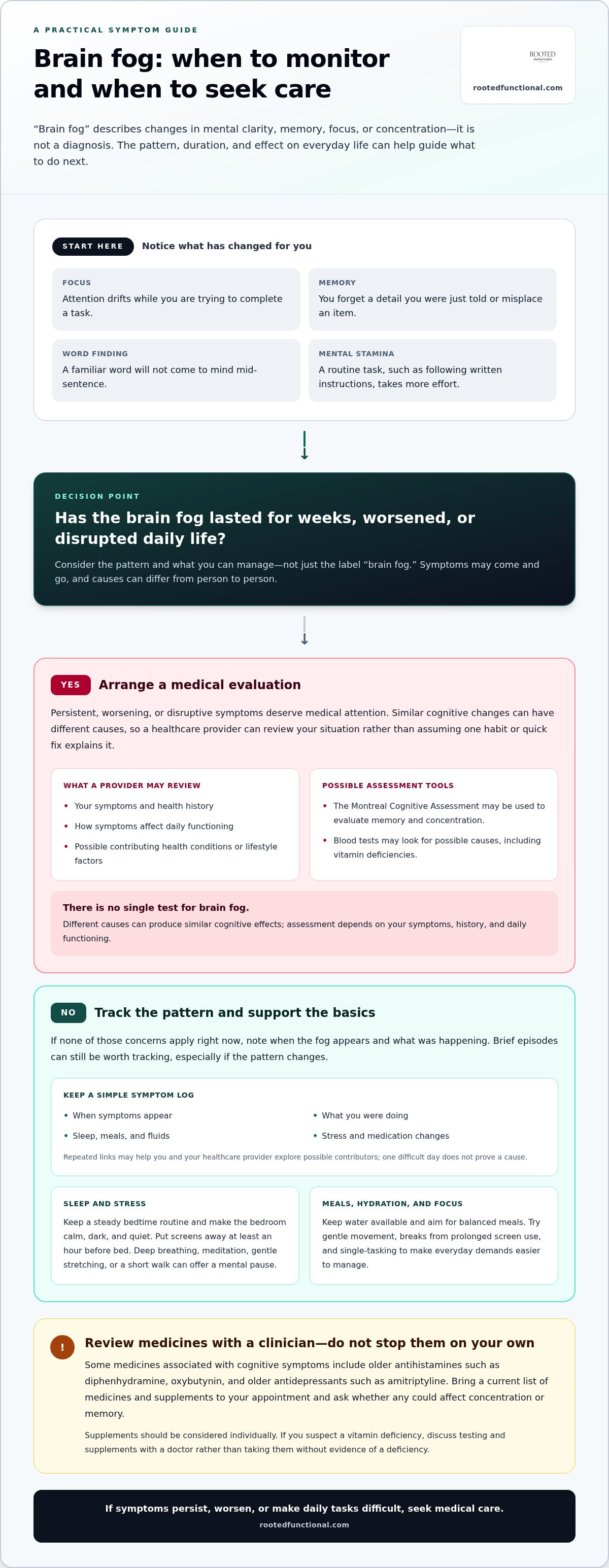
Doctors assess persistent brain fog by reviewing your symptoms, health history, and daily functioning. There’s no single test for brain fog because different causes can produce similar cognitive effects. A healthcare provider may use the Montreal Cognitive Assessment to evaluate memory and concentration, and blood tests to look for possible causes, including vitamin deficiencies.
Brain fog describes a group of symptoms, not a medical condition or diagnosis. It can be hard to put into words: you may know what you want to say but struggle to find it, or read the same sentence several times without absorbing its meaning. These changes can affect memory, focus, clear thinking, and how quickly you organize thoughts.
Symptoms may come and go or feel worse at particular points in the day. For example, a person might lose track of a conversation after a poor night’s sleep, forget a familiar appointment, or find it difficult to switch between work tasks. Brain fog may last a few days to weeks, and in some cases it can continue for months to years. The pattern and effect on everyday life are useful details to describe during an appointment.
Focus: You start a task, then realize your attention has drifted.
Memory: You misplace an item or forget a detail you were just told.
Word finding: You pause mid-sentence because a familiar word won’t come to mind.
Mental stamina: A routine task, such as following written instructions, takes more effort than usual.
These examples don’t identify the cause on their own. Poor sleep, dehydration, stress, and some medications can contribute, as can health conditions. Briefly record when the fog appears, what you were doing, and any changes in sleep, meals, hydration, or medication. This gives a healthcare provider a clearer picture than the label “brain fog” alone.
Some medications associated with cognitive symptoms include older antihistamines such as diphenhydramine, oxybutynin, and older antidepressants such as amitriptyline. Don’t stop a prescribed medicine on your own. Instead, bring a current list of medications and supplements to your appointment and ask whether any could affect concentration or memory.
Supportive habits may help reduce lifestyle-related triggers. A consistent bedtime, balanced meals, adequate hydration, and breaks from prolonged screen use can support clearer thinking. If symptoms persist or interfere with daily tasks, seek medical evaluation rather than relying on lifestyle changes alone. Doctors may consider medicines such as antidepressants or nonsteroidal anti-inflammatory drugs for symptom management, while discussing possible side effects.
Lifestyle causes, including sleep, stress, and hydration
Brain fog can follow lifestyle patterns that strain attention and energy. Poor sleep, stress, dehydration, poor nutrition, drug or alcohol use, jet lag, and excessive screen time are possible triggers. A late night followed by a skipped breakfast and hours of screen work, for example, can leave you tired and less able to remember details. These factors may overlap, so noting when symptoms appear can help you and your doctor look for patterns.
Sleep affects how alert you feel and how easily you concentrate. An inconsistent bedtime, a noisy bedroom, or scrolling in bed can make restful sleep harder. Try keeping a steady bedtime routine, making the bedroom calm, dark, and quiet, and putting screens away at least an hour before bed. If you’ve been trying to fall asleep for more than 20 minutes, get out of bed and do something relaxing until you feel sleepy.
Stress can drain mental energy. A tense workday, family demands, or ongoing worry may make it harder to hold thoughts in mind or switch between tasks. Deep breathing, meditation, and gentle stretching can help ease stress. A short walk outside can provide a mental pause after a demanding stretch of work. Notice whether concentration changes on days with fewer breaks or more pressure.
Hydration and meals matter, too. Dehydration may contribute to brain fog, while poor nutrition can leave meals lacking in nourishment. Keep water available during the day and build balanced meals with foods such as nuts, berries, and healthy fats. If you skip lunch, note whether fatigue or trouble focusing follows. A simple log of sleep, meals, fluids, stress, and symptoms can reveal repeated links without treating one difficult day as proof of a cause.
Which medications and supplements can cause brain fog? Some medications associated with brain fog include anticholinergic drugs, older antihistamines such as diphenhydramine, oxybutynin, and older antidepressants such as amitriptyline. Supplements should be considered individually. If you suspect a vitamin deficiency, discuss testing and supplements with a doctor rather than taking them without evidence of a deficiency. Don’t stop prescribed medicine on your own. Share your medication and supplement list with your doctor so they can review possible effects and interactions.
Small changes can help clarify whether a lifestyle factor is contributing, but persistent or worsening symptoms call for a closer look. A Root Cause Consultation can help explore possible contributors when sleep, stress, hydration, or nutrition changes haven’t resolved your concerns.
When should brain fog be treated by a healthcare provider?
Persistent brain fog deserves medical attention when it lasts for weeks, worsens, or disrupts daily life. The cause matters because similar cognitive changes can accompany very different illnesses and health conditions.
Associated Illnesses and Health Conditions
Brain fog can be associated with health conditions that affect cognitive function, hormones, mood, or energy. Examples include long COVID, migraines, Lyme disease, menopause, pregnancy, chronic fatigue syndrome, diabetes, hypoglycemia, thyroid problems, sleep apnea, and autoimmune disorders such as lupus. Depression and anxiety can also affect concentration. These associations don’t establish a diagnosis, but they show why persistent symptoms deserve more than guesswork.
Vitamin or mineral deficiencies, including low iron, can contribute to brain fog. A doctor may use blood tests to look for nutritional deficiencies and other possible causes. Discuss testing if symptoms persist, especially alongside fatigue or other changes. Avoid taking supplements without evidence of a deficiency.
Seeking Care from a Healthcare Provider
Contact a healthcare provider if trouble remembering or focusing continues for weeks, follows an illness, or makes everyday tasks difficult. Symptoms that worsen or don’t improve with lifestyle changes also merit evaluation. Describe when the fog began, how it affects work or home routines, and whether it changes alongside sleep, medication, or other symptoms.
Some symptoms need prompt medical attention. Talk to a doctor if you feel confused, numb, or off balance rather than treating these changes as ordinary fatigue. If brain fog affects your quality of life, give specific examples, such as missing appointments or struggling to follow familiar instructions. Clear examples help guide the conversation.
There’s no single test for brain fog because its causes vary. A healthcare provider may review your health history, assess your symptoms, and use the Montreal Cognitive Assessment to evaluate memory and concentration. Blood tests may help identify vitamin deficiencies or other clues. The findings help determine which causes need further evaluation.
Mental health deserves attention, too. Depression and anxiety may be associated with brain fog, and stress can make clear concentration harder. Tell your provider about changes in mood, ongoing worry, and how symptoms affect daily activities. This context helps identify possible contributors and supports a more complete assessment.
Lifestyle changes to improve mental clarity
Daily habits can support attention, memory, and clearer thinking. Build changes around sleep, movement, nourishing meals, and stress management, then notice which routines help you function better.
Protect a consistent sleep schedule and make room for restorative rest. Adults can aim for 7 to 9 hours of quality sleep per night to support cognitive function and memory consolidation, according to Cleveland Clinic. A steady wake time, a dark bedroom, and a calming wind-down routine can make that goal easier to reach. If late caffeine or alcohol disrupts your sleep, reduce them later in the day and observe whether mornings feel clearer.
Movement gives your day a useful reset. Cleveland Clinic recommends 30 minutes of physical activity each day as one strategy that may help brain fog. A weekly goal of 150 minutes of moderate activity can include brisk walks, cycling, or dancing. Start with a walk around your neighborhood or a short stretching session when sitting for long periods leaves you sluggish. Choose an activity you can repeat consistently rather than pushing through exhaustion.
Build meals around whole foods, lean proteins, fruits, and vegetables. Fish, walnuts, and flaxseeds provide omega-3 fats, while fiber-rich foods support gut health. For example, add berries and walnuts to breakfast, or include salmon and vegetables at dinner. Regular balanced meals also make it easier to notice whether skipped meals coincide with fatigue or reduced concentration. Food choices support overall health, but they don’t identify or treat a specific deficiency.
Stress can make focus harder, so create a small daily pause. Deep breathing, meditation, or gentle stretching can fit into a morning routine or a break between tasks. Try single-tasking: close unrelated tabs, finish one work step, then move on. Writing down appointments and key details can also reduce the effort of trying to remember everything at once.
Hormonal shifts during pregnancy or menopause can coincide with concentration changes. Discuss menopause symptoms such as hot flashes with a healthcare provider, including whether hormone therapy is appropriate. Thyroid problems can also be associated with brain fog, so persistent symptoms alongside other health changes deserve assessment. An autoimmune condition may call for a broader discussion of symptoms and overall health, rather than lifestyle adjustments alone.
Keep a simple record of sleep, activity, meals, stress, and mental clarity. Patterns in that record can help you decide which habits to adjust and what to discuss with a healthcare provider.
Practical ways to manage brain fog day to day
When brain fog interrupts your routine, reduce the mental load of each task. A notebook, planner, or digital notes app can hold appointments, reminders, and details you might otherwise struggle to remember. For example, write down the next step before switching projects. This supports daily functioning without asking your tired brain to keep every detail active. If you’re wondering how to get rid of brain fog for good, start by noticing which tasks have become harder and what helps you manage them.
Make work easier to start and finish. Break an overwhelming project into smaller steps, such as opening a document, drafting one paragraph, then reviewing it. Try a focused-work rhythm of 25 minutes followed by a 5-minute break. If trouble concentrating rises sooner, pause, stretch, or take a short walk, then return when you feel ready to focus again.
Reduce the number of decisions competing for attention. A consistent morning routine can keep small choices, like when to eat breakfast or pack your bag, from crowding your thinking. Single-tasking also helps: close unrelated browser tabs, silence nonessential notifications, and finish one task before starting another. Build screen-free periods of 15-20 minutes into the day to ease digital overload.
Use a two-minute rule: If a task takes less than two minutes, handle it now, such as replying to a simple message.
Keep essentials visible: Put keys beside your bag and leave a written reminder near the door.
Plan recovery breaks: Step away from demanding work before mental fatigue builds.
Track patterns: Note when brain fog appears and what was happening beforehand.
A short reset can break up a draining stretch of screen work or errands. Try walking outside, stretching, or taking a quiet pause. If you use caffeine to stay alert, keep it moderate and don’t rely on it to override ongoing fatigue. Notice whether a break restores focus or symptoms continue despite changes to your routine. If you’re wondering how to get rid of brain fog for good, these observations can help you identify what deserves attention next.
Daily tools can make symptoms easier to manage, but persistent trouble with memory or concentration still deserves evaluation. A medication side effect, sleep problem, or underlying health condition may need attention beyond organization strategies. If weight concerns are also part of your health picture, the Functional Weight Loss Program may be a relevant next step to discuss.
Rooted Functional Medicine: Healing Neuropathy Webinar
Rooted Functional Medicine’s Healing Neuropathy Webinar offers education for people exploring neuropathy and its possible root causes. It may be relevant if brain fog occurs alongside neuropathy concerns, but it isn’t a treatment for brain fog. For persistent cognitive symptoms, a Root Cause Consultation can help you discuss potential contributors and what may deserve further attention. The aim is to look beyond the symptom alone and consider your broader health picture. If you’re also managing an autoimmune condition or Type 2 diabetes, the Autoimmune Solutions Program and Type 2 Diabetes Reversal Program may be relevant offerings to explore. For unexplained symptoms affecting your daily life, speak with an appropriate healthcare provider. If you’d like to learn more about Rooted Functional Medicine’s approach, visit rootedfunctional.com.
Take the Next Step Toward Clearer Thinking
If you’re still wondering how to get rid of brain fog for good, take the next step by discussing what may be affecting your health. You don’t have to dismiss persistent symptoms or keep guessing alone. Bring your questions and concerns to a conversation about care tailored to your individual needs.
Rooted Functional Medicine offers a Root Cause Consultation for people seeking a closer look at possible contributors to ongoing health concerns. The Autoimmune Solutions program may be relevant when autoimmune challenges are part of your health picture, and the Healing Neuropathy Webinar offers education about neuropathy. These are distinct offerings, so choose the path that best matches what you’re trying to understand.
A thoughtful next step can help you move from uncertainty toward a more informed plan. Contact Rooted Functional Medicine to start a conversation about your concerns. Keep paying attention to what your mind and body are telling you, and take the next step at a pace that feels right.
Frequently Asked Questions
What is brain fog?
Brain fog is an informal name for changes in mental clarity, focus, memory, or concentration, not a diagnosis. You might lose your place while reading a familiar recipe or struggle to follow a conversation in a noisy room. The experience varies, so describing what feels different and when it happens gives a healthcare provider more useful information than the phrase “brain fog” alone.
What causes brain fog, and what medical conditions can lead to it?
Brain fog can have lifestyle, medication-related, or medical contributors, and several can overlap. Possible associations include long COVID, migraines, menopause, pregnancy, diabetes, thyroid problems, sleep apnea, autoimmune disorders, low iron, and vitamin deficiencies. Look for patterns: note whether concentration changes with a new medication, illness, hormonal transition, or disrupted sleep. A pattern can guide evaluation, but it doesn’t establish a diagnosis.
What symptoms of brain fog require urgent medical attention?
Seek prompt medical assessment if brain fog comes with confusion, numbness, or feeling off balance. Don’t dismiss these symptoms as ordinary tiredness or manage them only with rest and hydration. Describe what changed, when it began, and how it affects your ability to function. If you’re unsure how serious a new symptom is, contact a healthcare provider promptly rather than waiting for a routine appointment.
What evidence-based steps can reduce brain fog, including sleep, exercise, hydration, and diet?
Start with repeatable routines rather than trying several changes at once. Cleveland Clinic recommends adults aim for 7 to 9 hours of quality sleep nightly and suggests 30 minutes of physical activity each day. Keep water available, and plan balanced meals with whole foods, lean protein, fruits, and vegetables. For a practical test, record one habit and your concentration each day, then look for patterns rather than expecting an instant change.
How can stress, anxiety, depression, and burnout contribute to brain fog, and what treatments help?
Stress, fatigue, anxiety, and depression can make it harder to sustain attention or organize thoughts. During a demanding period, you might reread an email several times or forget a task you usually handle easily. Brief breathing exercises or meditation can help manage stress. Psychotherapists trained in cognitive behavioral therapy may teach psychological techniques for managing symptoms. Persistent mood concerns also deserve a conversation with a healthcare provider.
How long does brain fog last after COVID-19, and what treatments may help?
After COVID-19, concentration and memory problems can persist for months, and brain fog may last months to years in some cases. There isn’t one specific treatment for brain fog; the useful approach is identifying and addressing contributing causes. Note how symptoms affect daily tasks and whether they change over time. If mental fog continues after recovery or interferes with quality of life, discuss it with a healthcare provider.
Which brain fog remedies have evidence, and which supplements or treatments should be avoided?
Practical steps, alongside clinical guidance, include improving sleep habits, eating nourishing meals, being physically active, and writing down important information. Don’t take vitamin supplements just because brain fog might reflect a deficiency; discuss testing and treatment with a healthcare provider first. Some medicines, including diphenhydramine, oxybutynin, and amitriptyline, may be associated with cognitive symptoms. Don’t stop prescribed medication yourself; ask about possible side effects and options for your situation.
When should someone with persistent brain fog see a doctor, and what kind of specialist should they see?
Talk with a healthcare provider if memory or focus problems continue for weeks, worsen, or interfere with daily life. Start by describing the changes you notice and how they affect work, home tasks, or conversations. There’s no single brain fog test; evaluation may include a Montreal Cognitive Assessment or blood tests, depending on your symptoms. The suspected cause and findings help determine whether further evaluation by a specialist is appropriate.