How to Calm an Autoimmune Flare Up: A Root-Cause Recovery Guide
- 3 days ago
- 12 min read
What if your latest autoimmune flare isn't a sign that your body is failing, but a loud, cellular SOS that it's finally ready to heal? You've likely spent days on the couch, battling unpredictable fatigue and joint pain that feels like it came out of nowhere. It's exhausting to be told your labs are "normal" when you can barely make it through your morning routine. You need to know how to calm an autoimmune flare up without just adding more medication to your cabinet. We understand that frustration. We've been there too.
In this guide, we're moving beyond temporary fixes to discover science-backed functional strategies that dampen systemic inflammation at the source. You'll gain a clear framework for identifying your personal triggers and a path toward long-term remission. It's time to stop feeling dismissed and start uncovering the real drivers of your health. We'll explore how to quiet the cellular noise, identify hidden environmental stressors, and regain the daily function you deserve.
Table of Contents
Understanding the Autoimmune Flare: Why Your Symptoms Suddenly Spike
An autoimmune flare is more than just a bad afternoon. It's a systemic event where your immune system ramps up tissue inflammation to a level that becomes impossible to ignore. To truly understand What is an autoimmune disease?, you must realize it's a state of chronic overactivity that occasionally hits a breaking point. When you experience the heat of joint pain or the heavy cloud of brain fog, your body isn't failing you. It's communicating. These symptoms are actually protective signals. Your body is trying to force you to slow down so it can address the internal fire. It's incredibly frustrating when a doctor looks at standard blood work and tells you everything is "normal." We know that "normal" labs often miss the cellular drivers of your pain. You aren't imagining this. You're experiencing a legitimate physiological crisis.
The Emotional Cycle of Autoimmune Relapse
When symptoms spike, anxiety usually follows. You might find yourself stuck in a "why me" mindset that feels impossible to shake. This isn't just an emotional hurdle; it's a physiological one. Your nervous system and immune system are constantly talking to each other. High stress signals tell your immune system to stay on high alert, which keeps the inflammation loop running. If you're looking for how to calm an autoimmune flare up, you have to address this connection. Staying calm isn't just a platitude. It's a clinical necessity for dampening the immune response and moving your body back into a state of repair.
When a Symptom Becomes a Flare
Not every bad day is a true relapse. A flare is usually defined by the intensity and duration of systemic markers. If your symptoms persist for more than 48 hours and affect multiple areas of your life, it's likely a true flare. Tracking these patterns is vital for your recovery. We recommend documenting three key things: the duration of the spike, the intensity of the fatigue, and any recent changes in your environment or diet. This data helps us dig into the root cause rather than just masking the pain. Documenting your journey is the first step toward regaining control. If you're ready to stop guessing and start investigating, you can learn more about our Autoimmune Solutions Program to find your specific triggers.
What Causes Autoimmune Flares? Identifying the Hidden Triggers
Understanding what ignites a flare is the first step toward extinguishing it. Many patients feel their symptoms are random, but they aren't. Your immune system is reacting to specific, often hidden, catalysts. High on this list is cortisol dysregulation. When your stress response is stuck in the "on" position, cortisol stops acting as an anti-inflammatory agent; it starts fueling the fire instead. This is a common hurdle when learning managing autoimmune symptoms effectively. Learning how to calm an autoimmune flare up starts with identifying these silent triggers before they overwhelm your system.
Hidden infections are another frequent culprit. Your immune system might be locked in a battle with a dormant virus or a bacterial overgrowth in the gut. While you feel the crushing fatigue, your body is actually diverting all its energy to a cellular war. Environmental toxins like mold or heavy metals add to this burden. They act as silent disruptors, keeping your immune system in a state of hyper-vigilance that eventually leads to a tissue-damaging spike.
Hormonal shifts also play a significant role. Fluctuations in estrogen or progesterone can trigger a sudden increase in inflammatory cytokine production. This is why many women notice their symptoms correlate with their monthly cycles. Identifying these patterns is essential for knowing how to calm an autoimmune flare up before it spirals. We look for these connections because your body doesn't work in isolation; every system affects the others.
Dietary Triggers and the Gut Connection
The gut is the gateway to your immune system. For many, gluten and dairy are the primary sparks. These proteins can trigger "leaky gut," a condition where the intestinal lining becomes permeable. It allows undigested food particles into the bloodstream, where the immune system attacks them. It's vital to distinguish between a true allergy and a food sensitivity. Sensitivities often drive the slow, systemic inflammation that leads to a relapse.
Environmental and Lifestyle Disruptors
Your environment matters more than you might think. Poor sleep quality prevents your immune system from performing its nightly "reset." Without deep, restorative sleep, inflammation levels remain elevated. Even extreme temperature changes or seasonal shifts can stress the body enough to tip the scales. Take a look at your home and workspace. Hidden chemicals or synthetic fragrances could be adding to your total toxic load, making you more susceptible to a flare.
If you're tired of guessing which trigger is causing your pain, it's time for a deeper investigation. You can schedule a Root Cause Consultation to begin uncovering your unique biological blueprint and find a path back to steady health.
Beyond the Surface: Triggers vs. Biological Root Causes
Imagine your body as a bucket. Throughout your life, you collect stressors: environmental toxins, poor sleep, and chronic infections. These fill the bucket slowly. A flare happens when that bucket finally overflows. The stressor that caused the overflow is just a trigger. It's the last drop. To truly understand how to calm an autoimmune flare up, we have to look at what filled the bucket in the first place. If we only focus on the last drop, we miss the systemic issues that made the overflow inevitable.
At the heart of this overflow is mitochondrial health. Your mitochondria are the engines of your cells. When they're overwhelmed by oxidative stress, they can't produce the energy needed for proper immune regulation. This creates a constant hum of chronic inflammation. Think of it as a background noise that never quite goes away. This persistent state of high alert makes your system twitchy. It makes you more susceptible to sudden, painful spikes because your body is already operating near its limit. Addressing the trigger might stop the overflow today. It won't empty the bucket for tomorrow.
The Science of Immune Overstimulation
Cytokines are the chemical messengers that tell your immune system to attack. During a flare, these messengers are screaming. This overstimulation leads to B and T cell dysregulation. Your body loses its ability to distinguish between its own tissues and foreign invaders. This is why Autoimmune disease treatment must go deeper than just suppressing these cells. We need to clear the path for healing through cellular detoxification. Removing the biological sludge that keeps the system on high alert is essential for restoring balance.
Why Conventional Medicine Often Misses the Mark
Most conventional approaches focus on masking the symptom. They use medications to turn down the volume of the flare. While this offers temporary relief, it ignores the investigative work required for lasting remission. Standard blood work often looks at the surface. It fails to measure the cellular vitality that determines your long-term health. This is the difference between a traditional specialist and a What is a Functional Medicine Doctor? We don't just want to turn off the alarm. We want to find out why the fire started. We provide a clear roadmap for how to calm an autoimmune flare up by investigating these hidden cellular drivers.
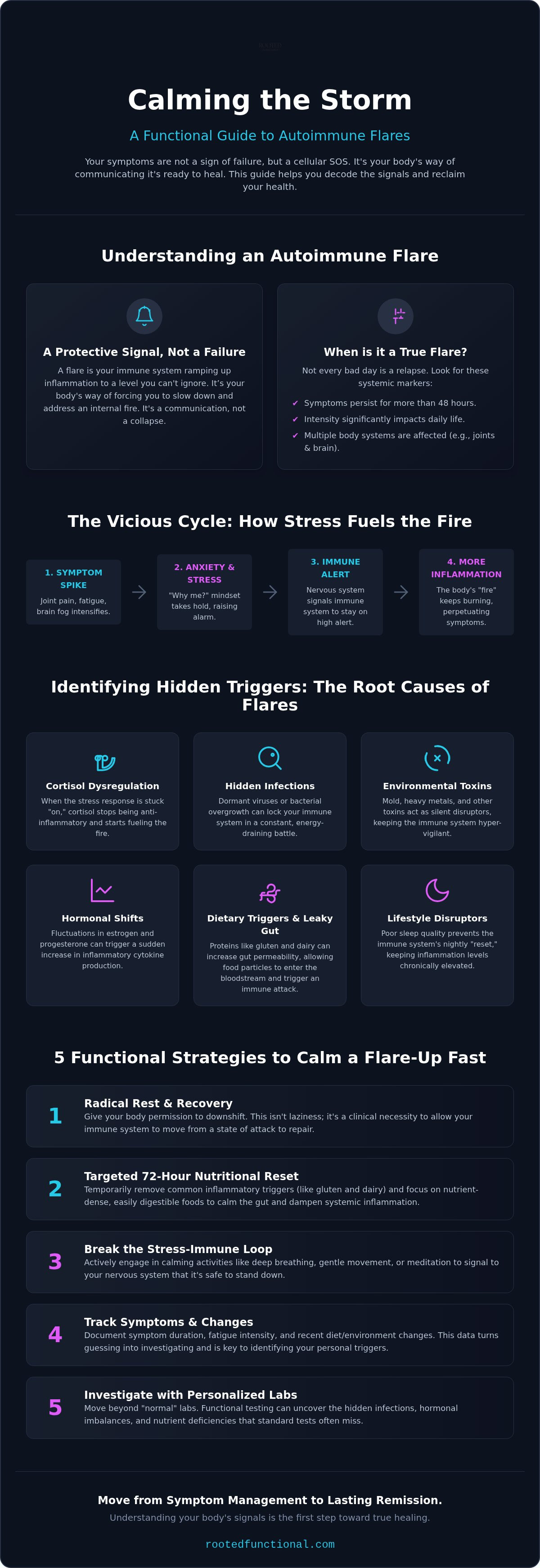
5 Functional Strategies to Calm an Autoimmune Flare Up Fast
When you're in the middle of a spike, you need a plan that works now. Learning how to calm an autoimmune flare up requires a shift from maintenance to emergency response. You can't keep pushing through the pain. Your body needs a hard stop. We recommend a multi-pronged approach that targets inflammation from every angle. Start by prioritizing radical rest. This means 9 or more hours of sleep every single night. It's non-negotiable because your immune system performs its most critical repair work during deep sleep. If you skip this, your body remains in a state of high alert.
Support this rest with nervous system regulation. Your vagus nerve is the "brake pedal" for your immune system. You can stimulate it through deep belly breathing, humming, or even splashing cold water on your face. These simple actions signal to your brain that the immediate danger has passed. This helps lower the inflammatory "hum" we discussed earlier. Additionally, use strategic supplements like Glutathione and Curcumin. Glutathione is the master antioxidant that neutralizes oxidative stress at the cellular level. Curcumin acts as a natural fire extinguisher for cytokine activity. These are targeted interventions designed to quench the fire quickly.
The Emergency AIP Reset
Start a 72-hour nutritional reset immediately to reduce gut-driven inflammation. Remove grains, nightshades like tomatoes and peppers, and all processed sugars. These are common irritants that can trigger "leaky gut" and keep your immune system on the attack. Instead, flood your system with healing nutrients. Sip on warm bone broth to provide the amino acids your gut lining needs. Prioritize wild-caught fish for high-dose omega-3s. Fill your plate with sulfur-rich vegetables like kale and cabbage to support liver function. The AIP reset is a temporary therapeutic tool, not a forever diet. It provides the biological space your body needs to start the healing process.
Supporting Detox Pathways
You must support your body's natural detox pathways to move inflammatory markers out of your system. We focus on "pooping, peeing, and sweating" as the primary exit strategies. Drink plenty of filtered water to flush your kidneys. Ensure you're moving your bowels daily; if you're constipated, the toxins just recirculate. If you have the energy, try very gentle movement like light stretching or a slow walk. This moves your lymph fluid without the stress of over-exertion. You can explore more Natural Treatments for Autoimmune Diseases that prioritize these natural pathways. If you want a personalized plan to stop the cycle of flares, you can book a Root Cause Consultation today.
Moving From Management to Mastery: The Rooted Functional Medicine Approach
Simply "getting through" another flare is an exhausting way to live. When you're searching for how to calm an autoimmune flare up, you aren't just looking for temporary relief. You're looking for an exit from the cycle. Conventional approaches often treat these spikes as an inevitable part of your diagnosis. They offer more medication to mask the pain. At Rooted Functional Medicine, we reject the idea that you must live in a constant state of defense. Mastery means understanding exactly why your system reached its tipping point. It means looking beneath the surface to find the cellular drivers that standard blood work misses entirely.
Our Autoimmune Solutions Program is built on this investigative philosophy. We use advanced functional lab testing to uncover what standard tests often overlook. This includes identifying hidden viral loads, bacterial overgrowth, or environmental toxins that keep your immune system in a hyper-reactive state. Because we offer national telehealth support, you can access this high-level, expert care from the comfort of your own home. You don't have to navigate this complex journey in isolation. We provide the tools, the testing, and the clinical guidance to help you regain your daily function.
The Power of Personalized Protocols
One-size-fits-all diets often fail because they don't account for your unique biology. What heals one person might actually trigger inflammation in another. This is why we prioritize Food Sensitivity Testing. We want to know exactly which foods are filling your "bucket" so we can create a precise nutritional plan. We also focus on our Cellular Detoxification Program. This isn't a generic juice cleanse. It's a clinical process designed to clear inflammatory markers and restore mitochondrial health. By addressing these root causes, we help prevent future flares rather than just reacting to them when they arrive.
Your Next Steps to Lasting Relief
You've likely been told that your symptoms are something you just have to manage. We want you to know that you are not broken. Your body is responding to a set of internal and external stressors that haven't been fully identified yet. You don't have to do this alone anymore. We invite you to schedule a Root Cause Consultation to finally stop the guessing game and start your investigative journey. It's time to move toward a path of long-term remission and vitality. You can learn more about our approach and see how we help patients just like you move from suffering to solution.
Reclaiming Your Life Beyond the Flare
You've discovered that a flare is a cellular signal rather than a body failing. By moving beyond surface-level triggers to address biological root causes, you can finally break the cycle of exhaustion. We've provided the framework for immediate relief through the AIP reset and radical rest. But knowing how to calm an autoimmune flare up is just the start of your recovery journey. True health comes from uncovering the hidden infections and toxins that keep your system on high alert.
At Rooted Functional Medicine, we specialize in this investigative approach. Led by Dr. Adrienne Guthrie, the 2025 Best Emerging Leader in Functional and Natural Medicine, we provide personalized lab-based protocols tailored to your unique biology. Our national telehealth expertise means you can access world-class care no matter where you are. You don't have to navigate this journey alone or settle for "normal" lab results that don't match how you feel. It's time to stop guessing and start healing. Book Your Root Cause Consultation Today and take the first step toward lasting vitality. You are capable of healing, and we are here to guide you home.
Frequently Asked Questions
How long does an autoimmune flare-up typically last?
Autoimmune flares vary in duration, typically lasting anywhere from a few days to several weeks. The length often depends on your current inflammatory load and how quickly you identify and remove the triggering stressor. If your "bucket" is already near overflowing, the recovery process might feel slower. We focus on dampening the immune response immediately to shorten this window. Consistent rest and targeted nutritional support are essential for helping your body return to its baseline state.
Can stress alone cause a massive autoimmune flare?
Yes, acute or chronic stress is a powerful physiological catalyst that can ignite a massive flare. When you're under pressure, your body releases cortisol. While cortisol is naturally anti-inflammatory, prolonged stress causes your cells to become resistant to its effects. This leads to an unchecked increase in inflammatory cytokines. Managing your nervous system is just as important as your diet when learning how to calm an autoimmune flare up and prevent future spikes.
What is the best thing to eat when you are in the middle of a flare?
Focus on nutrient-dense, easily digestible foods that soothe the gut lining. Bone broth is an excellent choice because it provides essential amino acids like glutamine for tissue repair. You should also prioritize wild-caught fish for anti-inflammatory omega-3 fatty acids and sulfur-rich vegetables like broccoli or kale. These foods support your liver's natural detoxification pathways. Avoid all processed sugars, grains, and dairy, as these are the most common sparks for systemic inflammation during a relapse.
Should I exercise during an autoimmune flare-up?
High-intensity exercise should be avoided during an active flare because it adds more physiological stress to an already overwhelmed system. Your body needs to divert all its energy toward cellular repair. If you feel up to it, very gentle movement like slow walking or light stretching can help move lymph fluid. This helps clear out inflammatory markers without causing further exhaustion. Listen closely to your body. If movement makes you feel worse, prioritize radical rest instead.
Is it possible to have an autoimmune flare with normal lab results?
It's very common to experience a severe flare even when standard lab results appear "normal." Conventional blood work often looks for end-stage tissue damage rather than the subtle cellular drivers of inflammation. You might feel the pain and brain fog long before your markers hit the threshold for a traditional diagnosis. We use advanced functional testing to look deeper. We investigate the root causes, such as mitochondrial dysfunction, that these basic screenings frequently miss.
What is the difference between a flare and disease progression?
A flare is a temporary increase in immune activity and symptoms, while disease progression refers to the long-term advancement of tissue damage. Think of a flare as a forest fire that can be extinguished. Progression is the permanent loss of trees left behind. Our goal is to stop the flares quickly to prevent that cumulative damage. By identifying your unique triggers early, we can protect your long-term function and help move your body toward lasting remission.
Can supplements like glutathione really help stop a flare?
Glutathione is a highly effective tool because it acts as your body's master antioxidant. During a flare, your cells are under intense oxidative stress. Glutathione helps neutralize these harmful molecules and supports your liver in clearing out inflammatory debris. When combined with other strategies for how to calm an autoimmune flare up, targeted supplementation can significantly dampen the immune response. It provides the cellular support needed to quiet the fire and accelerate your recovery process.
When should I seek professional functional medicine help for my flares?
You should seek professional help if your flares are becoming more frequent, unpredictable, or severe. If you feel dismissed by conventional providers who only offer symptom-masking medications, it's time for a deeper investigation. We help you move beyond temporary management to true mastery of your health. Our investigative approach identifies the hidden infections and toxins that keep you stuck in the flare cycle. You don't have to wait for permanent damage to start your recovery.


Comments