Blood Sugar and Fatigue: Why Your Energy Crashes (And What Labs Miss)
- Aug 18
- 12 min read
You finished lunch an hour ago, but instead of feeling fueled, you're staring at your computer screen through a thick layer of brain fog. It's the same story every afternoon. You're "hangry" by 4:00 PM and waking up exhausted no matter how early you go to bed. It's draining to live in a body that feels like it's constantly running on empty. You've likely mentioned this to your doctor, only to be told your labs are normal. We understand how dismissive that feels. You know your body is struggling, even if the standard tests don't show it yet. The connection between blood sugar and fatigue is often much deeper than a single fasting glucose number can reveal.
We're going to pull back the curtain on why your energy is crashing and what your standard blood work is missing. You'll discover the hidden link between glucose fluctuations and chronic exhaustion. We will explore how functional medicine identifies the metabolic root causes that conventional tests often overlook. By the end of this guide, you'll understand the mechanism of glucose-related fatigue and learn exactly which tests actually show your true metabolic health. It's time to stop guessing and start healing.
Table of Contents
The Hidden Connection Between Blood Sugar and Daily Fatigue
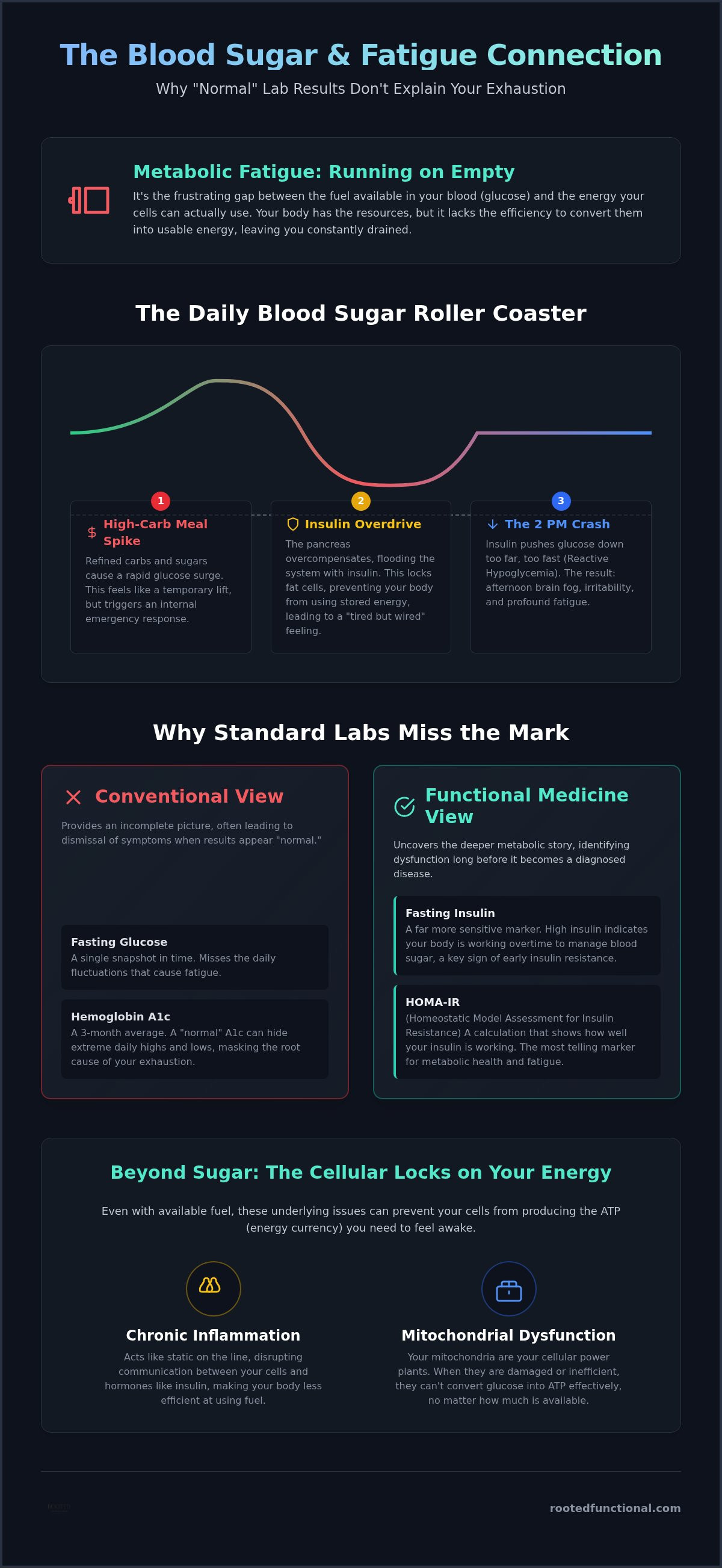
Living with chronic exhaustion often feels like a mystery without a solution. You drink the coffee. You try to sleep more. Yet, the heaviness remains. This isn't just a side effect of getting older or being busy. It is often a sign of metabolic fatigue. We define this as the gap between the fuel available in your bloodstream and the energy your cells can actually use. Your body has the resources, but it lacks the efficiency to turn them into life. Understanding the link between blood sugar and fatigue is the first step toward reclaiming your vibrancy.
Blood sugar is the primary currency of human energy. Every cell in your body relies on a steady supply of glucose to perform its duties. When this system works, you feel balanced and focused. When it fails, you feel like you're running on a dying battery. Many people struggle with a loss of metabolic flexibility. This is the body's natural ability to switch between burning glucose and burning stored fat for fuel. If you've lost this flexibility, you become dependent on the next meal for a temporary boost. It's a cycle of constant depletion.
Why Your Energy Depends on Glucose Stability
Your brain and muscles are the most demanding consumers of glucose. They require a narrow range of blood sugar to function at their peak. When you experience a sharp spike after a meal, it might feel like a temporary lift, but the internal cost is high. High glucose levels can cloud your thinking and trigger inflammation. Shortly after, the body often overcorrects. This can lead to Reactive hypoglycemia, a state where blood sugar drops too low, too fast. Glycemic variability describes these frequent, jagged fluctuations in blood glucose that are directly linked to chronic lethargy and brain fog. Stability is the key to sustained power.
The "Normal" A1c Fallacy
If you've asked for help and been told your labs are "normal," you aren't alone. Conventional medicine relies heavily on the Hemoglobin A1c test. This marker provides a three-month average of your blood sugar. While it's useful for diagnosing diabetes, it's a poor tool for measuring daily energy. An average can hide a lot of pain. You can have a "perfect" A1c while spending half your day in a spike and the other half in a crash. It's an incomplete picture that leaves many patients feeling dismissed and hopeless. Relying on fasting glucose alone is like looking at a single frame of a movie and trying to guess the ending. We know you feel exhausted. We know your labs don't always explain why. There are better ways to measure how blood sugar and fatigue are impacting your life.
The Blood Sugar Roller Coaster: Why Spikes Lead to Exhaustion
Most people view a sugar spike as a burst of energy. In reality, it is the beginning of a metabolic crisis. When glucose levels climb too high too fast, your body treats it as an emergency. The temporary "high" is quickly replaced by a profound sense of depletion. This cycle is the root cause of the relationship between blood sugar and fatigue. It's a physiological trap that leaves you searching for caffeine just to make it through the day. We see this pattern constantly in patients who feel like they've lost their spark.
The Insulin Overdrive Mechanism
Insulin is the key that opens your cells. But when sugar spikes, your pancreas overcompensates. It floods your system with insulin to protect your organs. This creates a secondary problem. High insulin levels act as a lock on your fat cells. Your body becomes unable to burn stored fat for fuel. You are effectively surrounded by energy you cannot use. This leads to the "tired but wired" sensation. Your blood sugar is dropping, so your body pumps out cortisol and adrenaline to keep you conscious. You feel anxious, yet physically drained. Over time, these frequent surges trigger neuro-inflammation. This is the real cause of the brain fog many people mistake for aging. If you want to see how your insulin levels are impacting your energy, a Root Cause Consultation can help uncover these hidden patterns.
Reactive Hypoglycemia and the 2 PM Crash
The afternoon slump is rarely about a lack of sleep. It is almost always about your lunch. When you eat refined carbohydrates or hidden sugars, your blood sugar skyrockets. Your body then overcorrects. This process is called reactive hypoglycemia. By 2 PM, your glucose levels haven't just returned to normal. They have bottomed out. This is why blood sugar and fatigue are so closely linked; the crash is the body's desperate signal that it's out of fuel.
A rapid drop in glucose triggers specific, uncomfortable symptoms:
Sudden, intense fatigue that makes your eyelids heavy.
Internal tremors or physical shakiness.
Cold sweats or clammy skin.
Irritability and "hanger" that disappears only after eating.
Stable energy feels like a calm, steady stream. It allows you to focus for hours without thinking about food. The roller coaster, however, is a series of peaks and valleys that leave your mitochondria exhausted. You don't have to live your life chasing the next snack just to stay awake. There is a way to step off the ride and restore your natural vitality.
Beyond Sugar: Root Causes of Metabolic Fatigue
Fixing your diet is a vital step, but for many, it's only half the battle. You might be eating "clean" and still feeling like you're walking through mud. This happens because the link between blood sugar and fatigue isn't just about what you put in your mouth. It's about how your body processes that fuel at a cellular level. Chronic inflammation acts like a physical barrier. It "gums up" your insulin receptors, making it nearly impossible for glucose to enter the cells where it's needed. When these cellular locks are stuck, your energy vanishes. Your body is essentially starving in a land of plenty.
Mitochondrial Health and Energy Production
Your mitochondria are the engines of your cells. Their primary job is to take the sugar from your blood and turn it into ATP, the actual fuel for life. If these power plants are damaged or sluggish, no amount of blood sugar management will fix your exhaustion. We call this "cellular starvation." You have fuel in the tank, but the engine won't start. We often find that specific nutrient deficiencies, particularly a lack of magnesium or B vitamins, prevent these engines from turning over. Without these co-factors, your metabolic fire simply goes out. Digging into these cellular root causes is the only way to restore true vitality.
The Stress-Blood Sugar Loop
Stress is a silent driver of metabolic chaos. When you're stuck in "fight or flight" mode, your body doesn't care about long-term health; it cares about immediate survival. Your adrenals pump out cortisol. This hormone signals your liver to dump stored glucose into your bloodstream for a quick burst of energy you don't actually use. This means you can experience spikes even if you haven't eaten a single gram of sugar. This is a major reason why blood sugar and fatigue often persist during high-stress seasons of life.
Chronic stress eventually leads to insulin resistance. Your cells become deaf to insulin's signal because they are constantly being bombarded. To break this cycle, you must address the nervous system alongside your nutrition. Simple, natural shifts like intentional breathwork or cold exposure can help lower the "background noise" of stress. This allows your metabolic pathways to finally rest and repair. Your gut microbiome also plays a role here. A healthy gut helps regulate how your body responds to these hormonal shifts, acting as a buffer against the highs and lows. You deserve a body that responds to your care, not one that remains stuck in a cycle of depletion.
Functional Testing for Blood Sugar and Fatigue
If you've been told your results are fine but you still feel like you're dragging through the day, the problem isn't your imagination. It's the testing. Conventional labs often wait for a crisis before they flag a problem. We look for the smoke before the fire. The relationship between blood sugar and fatigue is best understood through markers that measure how hard your body is working to maintain balance. When we look deeper, we often find that the body is struggling long before a standard screening reveals a diagnosis.
Advanced Labs Your Doctor Might Not Order
Fasting Insulin is our most valuable tool for early detection. This marker often rises years, sometimes decades, before your A1c or fasting glucose ever moves. If your insulin is high, your body is working overtime to keep your sugar levels stable. This constant effort is exhausting. We also calculate your HOMA-IR score. This simple ratio reveals exactly how resistant your cells are to insulin's signal. We combine this with inflammatory markers like hs-CRP. High inflammation "gums up" those cellular locks we discussed earlier, preventing fuel from reaching your mitochondria.
A comprehensive metabolic panel allows us to see the whole story of your health. Sometimes, the root of the issue is an immune response rather than a simple sugar problem. This is why we often use food sensitivity testing to identify hidden triggers. These sensitivities can fuel metabolic inflammation and drain your battery every time you eat. We don't want to just manage your symptoms; we want to uncover the biological reasons why you're tired.
The Power of Real-Time Data (CGMs)
For years, Continuous Glucose Monitors (CGMs) were reserved only for those with severe diabetes. Today, they are a game changer for anyone battling chronic exhaustion. Seeing your "glucose curve" in real time removes the guesswork from your daily life. You can see exactly how your body reacts to a specific lunch or a late-night snack. You might find that a "healthy" oatmeal breakfast causes a massive spike followed by a crash that ruins your entire afternoon.
Identifying these specific "trigger foods" allows you to personalize your nutrition based on your unique biology. It's about data, not trends. Testing, not guessing, is the only way to truly solve the mystery of your fatigue. If you are ready to stop the cycle of exhaustion and see what your labs are really telling you, a Root Cause Consultation is the next step toward finding your answers. You deserve to know exactly what is happening inside your body.
Restoring Your Energy Through Root-Cause Metabolic Care
We've spent years watching people settle for a life of half-energy because their labs looked "fine" to a traditional doctor. At Rooted Functional Medicine, we take a different path. Resolving the link between blood sugar and fatigue requires more than just cutting out sweets. It requires a comprehensive strategy that addresses your specific cellular environment. Our approach to Type 2 diabetes reversal isn't just for those with a clinical diagnosis. It's a blueprint for anyone whose metabolism has lost its way and left them exhausted.
True healing often starts with a Cellular Detoxification Program. This isn't a simple juice cleanse. It's a clinical process of removing the environmental and metabolic toxins that block your insulin receptors. When we clear this cellular "gunk," your cells can finally hear the signal to let fuel in. This restoration of insulin sensitivity is the foundation of lasting vitality. Because every body is unique, we don't believe in one-size-fits-all diets. A personalized protocol is the only way to ensure your specific metabolic blocks are removed for good. We're here to help you build that roadmap.
The Path to Metabolic Restoration
Moving from a state of chronic exhaustion to metabolic flexibility is a deliberate journey. It begins by replacing inflammatory triggers with nutrient-dense, anti-inflammatory eating patterns that support mitochondrial health. We focus on stabilizing your glucose levels throughout the day so you can stop the cycle of blood sugar and fatigue. For those whose energy issues are tied to deeper immune triggers, our Autoimmune Solutions Program addresses the systemic inflammation that keeps you stuck. We help you rebuild your health from the ground up.
Next Steps: From Normal Labs to Real Answers
You don't have to settle for "normal" when you can feel optimal. If you're tired of being told everything is fine while you struggle to stay awake, it's time for a new perspective. We invite you to watch our Healing Neuropathy Webinar to see our root-cause approach in action. This isn't just about managing a number on a lab report. It's about reclaiming your ability to show up for your family, your work, and yourself.
The most important step you can take is to stop guessing. A Root Cause Consultation is the beginning of your restoration. We'll look at your history, your advanced labs, and your unique goals to build a plan that actually leads to results. You've been dismissed long enough. It's time to finally be heard and finally get well.
Step Into a Life of Lasting Energy
You don't have to spend your life trapped on the blood sugar roller coaster. We've explored how "normal" labs often mask the true metabolic triggers behind your exhaustion. Real healing happens when we look at your cellular health and address the inflammation blocking your energy production. By uncovering the specific link between blood sugar and fatigue in your body, we can finally stop the guessing games. It's about moving from surviving to thriving. You've been dismissed long enough; it's time for real answers.
Dr. Adrienne Guthrie, an award-winning functional medicine expert, and our team use advanced functional labs to build a protocol as unique as your own DNA. Through nationwide telehealth care, we help you restore your metabolism from the root level. You deserve to wake up feeling refreshed and ready for the day. The answers you've been searching for are within reach. It's time to take the first step toward the vibrant life you were meant to live.
Book Your Root Cause Consultation to End the Fatigue Cycle and begin your journey toward optimal health today. We are ready to walk this path with you.
Frequently Asked Questions
Can blood sugar cause fatigue if I am not diabetic?
Yes, you can absolutely experience profound fatigue from blood sugar issues even with a normal A1c. Many people live with high glycemic variability. This means their levels swing wildly throughout the day. These jagged peaks and valleys drain your cellular energy. Your body works overtime to manage these shifts, leading to the exhaustion you feel. We often see this in patients whose systems are struggling long before a clinical diagnosis is made.
Why do I feel so tired immediately after eating a high-carb meal?
This is often caused by reactive hypoglycemia. When you consume a high-carb meal, your blood sugar skyrockets. In response, your pancreas releases a massive wave of insulin to clear the glucose. If your body overcorrects, your blood sugar drops too low and too fast. This sudden crash leaves your brain and muscles without their primary fuel source. You feel heavy, sleepy, and unable to focus until your levels finally stabilize again.
What are the signs that my blood sugar is causing my brain fog?
The most common sign is the timing of your symptoms. If you find it hard to concentrate an hour after lunch, or if your thinking clears up only after you eat, blood sugar is likely the culprit. Other signs include feeling "hangry," experiencing shakiness between meals, or needing caffeine to clear the afternoon haze. These are signals that your brain isn't receiving a steady, reliable stream of glucose to function at its best.
How long does it take to stabilize blood sugar and regain energy?
Most patients start to feel a shift in their energy levels within two to four weeks of starting a personalized protocol. However, true metabolic restoration takes time. Repairing your mitochondria and restoring insulin sensitivity is a deep cellular process that can take three to six months. We focus on sustainable, natural changes that build a foundation for long-term vitality. This approach moves you beyond a temporary fix toward real, lasting health.
What is the best test to see if blood sugar is causing my fatigue?
A Fasting Insulin test is the most predictive marker we use. While standard doctors focus on Fasting Glucose, insulin levels often rise years earlier to keep that glucose "normal." We also calculate your HOMA-IR score to measure insulin resistance. These tests provide a much clearer picture of the link between blood sugar and fatigue than a basic A1c. Seeing this data helps us stop the guesswork and start your healing journey.
Can stress cause blood sugar spikes even if I eat a healthy diet?
Yes, stress is a powerful driver of glucose levels. When you're under chronic stress, your body releases cortisol. This hormone tells your liver to release stored sugar into the bloodstream for "fight or flight" energy. Even if you haven't eaten a single gram of sugar, your levels can spike. This is why addressing the nervous system is just as important as nutrition when managing blood sugar and fatigue in your daily life.
Does coffee affect blood sugar and energy crashes?
Coffee can be a double-edged sword for your metabolism. For some, caffeine triggers a release of adrenaline and cortisol. This causes the liver to dump glucose into the blood. This can lead to a subsequent insulin spike and a mid-morning crash. If you find yourself needing more coffee just to fix the fatigue caused by the previous cup, your morning routine might be fueling your metabolic roller coaster instead of helping it.


Comments